
A clicking or popping shoulder is usually harmless, especially when there’s no pain attached to it. The sound often comes from gas bubbles releasing in the joint, tendons gliding over bone, or normal age-related changes. But when the clicking comes with pain, weakness, or a catching sensation, it can point to something that needs attention. Here’s how to tell the difference, and when it’s worth getting your shoulder looked at here in Oklahoma City.
What’s Actually Making That Noise?
Your shoulder is the most mobile joint in your body, and that mobility comes with a lot of moving parts. Tendons, ligaments, muscles, cartilage, and several small fluid-filled sacs all work together to let your arm move in nearly every direction. With that much going on, some noise is completely normal.
The medical term for joint noise is crepitus. It describes any clicking, popping, grinding, or cracking that a joint makes during movement. Crepitus shows up in shoulders, knees, knuckles, and necks, and most of the time it means nothing concerning at all.
In my 23 years of practice, I’ve had countless patients come in worried about a noisy shoulder. The first thing I tell them is that the sound itself is rarely the problem. What matters is what comes with the sound.
The Common, Harmless Causes
Gas Bubbles in the Joint
This is the same mechanism behind cracking your knuckles. The fluid that lubricates your joints contains dissolved gases. When the joint moves a certain way, the pressure changes and those gases release in a tiny pop. It’s harmless, and it doesn’t cause arthritis despite what you may have heard.
Tendons and Ligaments Moving Over Bone
As your shoulder moves, tendons and ligaments slide across the bony structures of the joint. Sometimes a tendon will snap or click as it moves over a bump of bone, especially during overhead motions. If there’s no pain, this is usually just the normal architecture of your shoulder doing its job.
Normal Age-Related Changes
As we age, the cartilage in our joints naturally thins and the surfaces become slightly less smooth. This can produce a soft grinding or clicking during movement. On its own, without pain or loss of function, this is typically nothing to lose sleep over.
When the Clicking Deserves a Closer Look
Here’s where it changes. While the noise itself is usually fine, certain combinations of symptoms suggest something is going on under the surface that’s worth evaluating.
Pay attention if your shoulder clicking comes with any of these:
- Pain during or after the clicking
- A catching or locking sensation, like the joint gets stuck momentarily
- Weakness when lifting or reaching
- Limited range of motion
- Clicking that started after an injury or fall
- Instability, like the shoulder feels as if it might slip out of place
When the noise comes packaged with any of those, it can signal an underlying issue. Let me walk through the most common ones.
Rotator Cuff Problems
The rotator cuff is a group of four muscles and their tendons that stabilize the shoulder. When one of these tendons is irritated, frayed, or partially torn, it can produce clicking along with pain and weakness, particularly with overhead movements. This is one of the more common causes of painful shoulder clicking, and it’s very treatable when caught early. We cover this in depth in our post on rotator cuff pain relief without surgery.
Labral Tears
The labrum is a ring of cartilage that helps keep the ball of the shoulder seated in its socket. A torn labrum often produces a deep clicking or catching sensation, sometimes with a feeling of instability. These injuries frequently follow a specific trauma, like a fall or a dislocation, though they can also develop gradually from repetitive overhead activity.
Shoulder Impingement
Impingement happens when the tendons of the rotator cuff get pinched during shoulder movement. This can create a clicking or snapping sensation along with a sharp pain when raising the arm to a certain height. It’s especially common in people who do repetitive overhead work or sports.
Early Frozen Shoulder
Frozen shoulder usually announces itself with stiffness and pain rather than clicking, but in the early stages some patients notice abnormal joint sounds as the shoulder starts to lose its normal smooth movement. If you’re noticing both clicking and a progressive loss of motion, it’s worth getting evaluated. Our post on frozen shoulder treatment explains how we approach this condition.
How We Figure Out What’s Going On
When a patient comes to Family Tree Chiropractic with a clicking shoulder, we don’t guess at the cause. We test.
The evaluation starts with a detailed history. When did the clicking start? Is there pain? Did it follow an injury? What movements make it worse? From there, we do a full orthopedic and neurological examination of the shoulder, including specific tests that isolate the rotator cuff, the labrum, and the joint mechanics. We assess your range of motion, your strength, and how the shoulder moves through its full arc.
When indicated, we use on-site digital X-rays to evaluate the bony structures and rule out arthritis or structural issues. If we suspect a soft tissue problem that needs imaging beyond X-ray, we’ll coordinate that and refer appropriately.
This thorough approach reflects how I’ve practiced for over two decades. A noisy shoulder might be nothing, or it might be the early sign of something that’s much easier to treat now than it will be in six months. The only way to know is to look properly.
How Chiropractic Care Helps a Problematic Shoulder
If your evaluation turns up an actual issue behind the clicking, the good news is that most shoulder problems respond well to conservative care, especially when caught early.
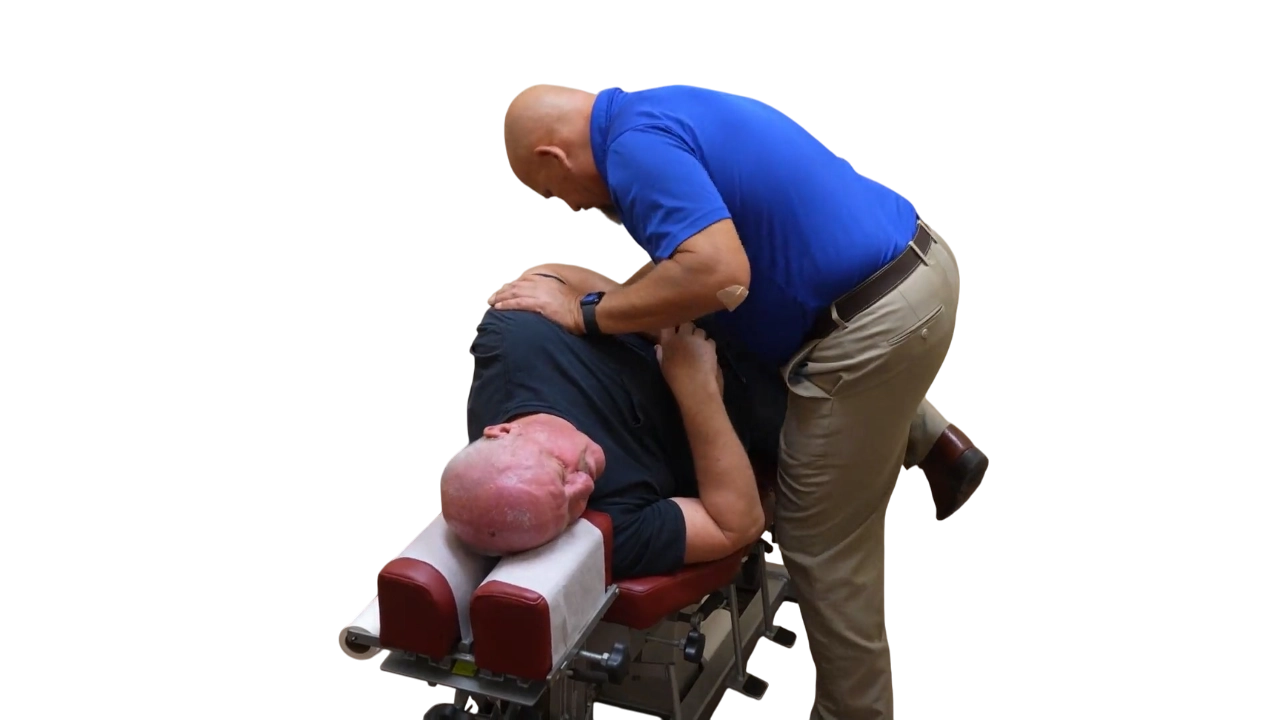
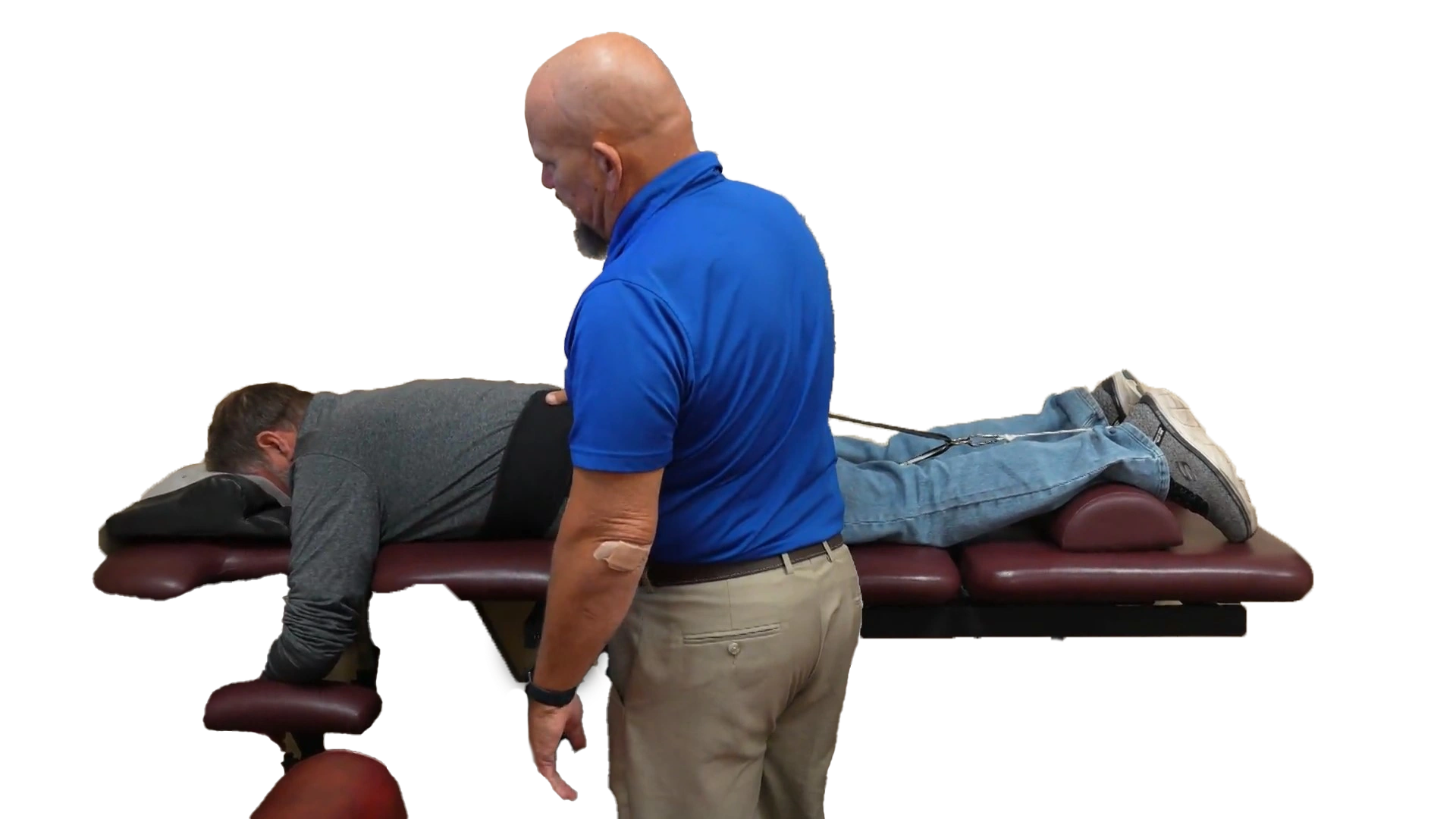
Treatment depends on what we find, but it often combines several approaches. Shoulder pain from joint dysfunction responds well to adjustments that restore proper movement to the shoulder and the surrounding structures, including the upper back and neck, which often contribute to shoulder problems.
For rotator cuff and tendon issues, we frequently use shockwave therapy and cold laser to stimulate healing in the affected tissue. Therapeutic massage releases the tight, guarded muscles that develop around a struggling shoulder. And targeted rehabilitation rebuilds the strength and stability that keep the problem from coming back.
This layered approach is part of the R.E.S.T.O.R.E. Method we use at our Oklahoma City practice. We don’t just quiet the symptoms. We work on the root cause and then strengthen the area so the correction holds.
What You Can Do at Home
If your shoulder clicks but doesn’t hurt, you generally don’t need to do anything special. Keep it moving, stay active, and don’t fixate on the noise.
If you want to support healthy shoulder function, a few simple habits help: maintain good posture (a rounded-forward posture changes shoulder mechanics), keep the muscles around the shoulder blade strong, and avoid repetitive overhead motions without proper warm-up. But if pain, weakness, or catching shows up, that’s the signal to stop self-managing and get evaluated.
Frequently Asked Questions
Is a clicking shoulder a sign of arthritis?
Not necessarily. A clicking sound alone, without pain or stiffness, is usually not arthritis. Arthritis typically produces a grinding sensation along with pain, morning stiffness, and gradual loss of motion. If you’re noticing those together, it’s worth an evaluation.
Should I stop exercising if my shoulder clicks?
If there’s no pain, no. Continuing to move and strengthen the shoulder is usually beneficial. If the clicking comes with pain or a catching sensation, ease off the aggravating movements and get evaluated before pushing through it.
Can a clicking shoulder heal on its own?
Harmless clicking doesn’t need to heal because nothing is wrong. When clicking is caused by an underlying issue like tendon irritation or impingement, early treatment produces much better outcomes than waiting and hoping it resolves on its own.
How long does it take to treat a problematic shoulder?
It depends entirely on the cause and severity. Mild tendon irritation may resolve in a few weeks. More significant rotator cuff or labral issues take longer. We give you a realistic timeline after a thorough evaluation rather than a one-size-fits-all answer.
Worried About Your Shoulder? Let’s Take a Look
If your shoulder clicking comes with pain, weakness, or catching, or if it just started after an injury, don’t wait it out. Family Tree Chiropractic in Oklahoma City can evaluate exactly what’s happening and tell you honestly whether it needs treatment.
Call us at (405) 340-4400 or book your appointment online. New patients start with our $49 comprehensive special, including consultation, adjustment, X-ray, cold laser, and a massage voucher.