Cold laser therapy and shockwave therapy both promote healing without surgery or medication, but they work through very different mechanisms and suit different conditions. Cold laser uses light energy to reduce inflammation and speed cellular healing, making it ideal for nerve pain, acute injuries, and inflammation. Shockwave uses focused acoustic waves to break down scar tissue and stimulate repair in stubborn, chronic conditions like tendonitis. Here’s how to know which one your situation calls for, based on how we use both here in Oklahoma City.
How Cold Laser Therapy Works
Cold laser therapy, also called low-level laser therapy or photobiomodulation, uses specific wavelengths of light that penetrate into damaged tissue. The light energy is absorbed by the mitochondria of your cells, which increases their production of cellular energy and accelerates the healing process.
The effects are gentle but meaningful. Cold laser reduces inflammation, decreases pain, and speeds up tissue repair at the cellular level. There’s no heat sensation, no discomfort, and no downtime. Most patients feel either nothing or a mild warmth during treatment.
Because it works by calming inflammation and boosting cellular healing, cold laser is particularly effective for conditions involving nerve irritation, acute soft tissue injuries, and inflammatory processes. It’s gentle enough to use on sensitive areas and in the early, painful stages of an injury.
How Shockwave Therapy Works
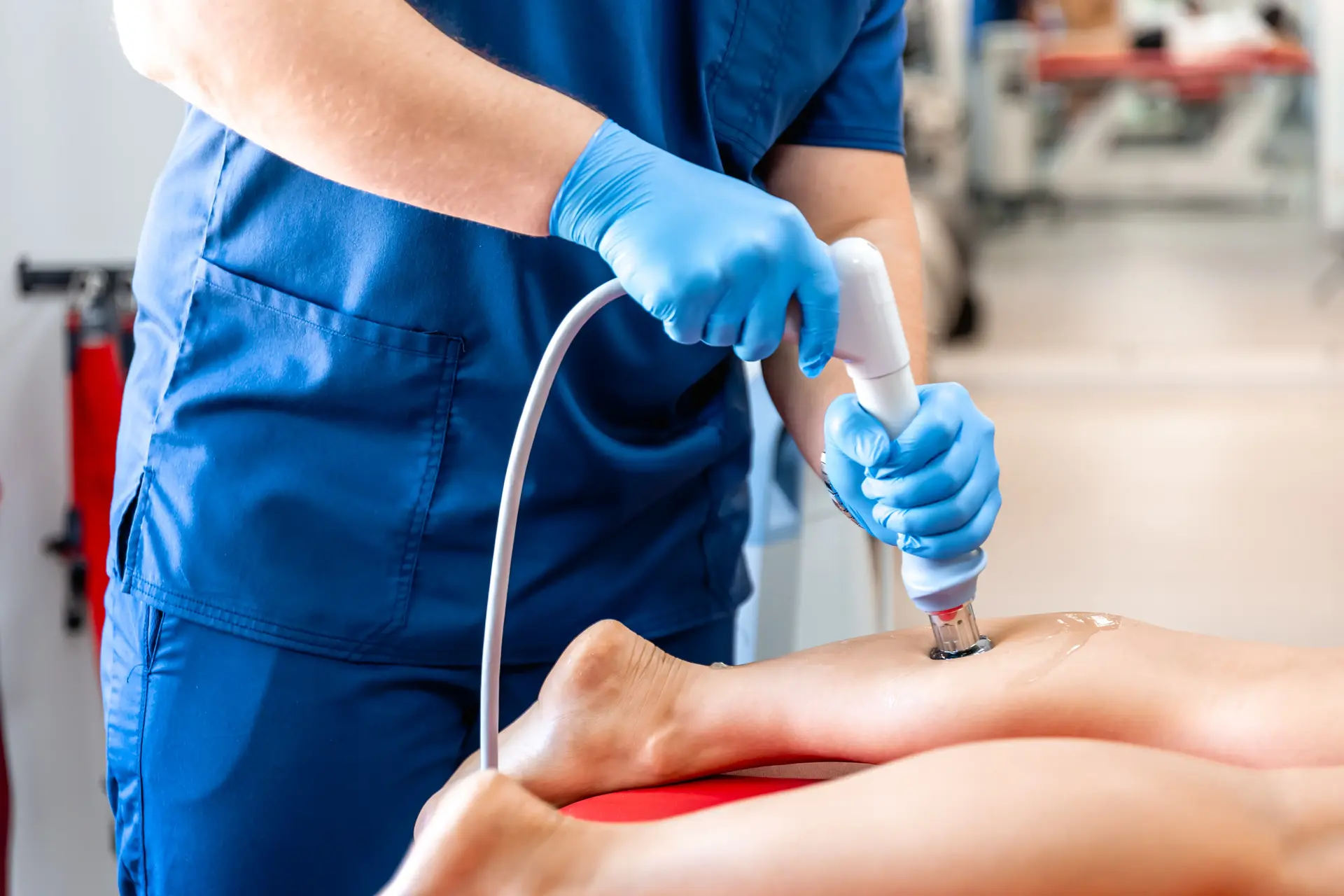
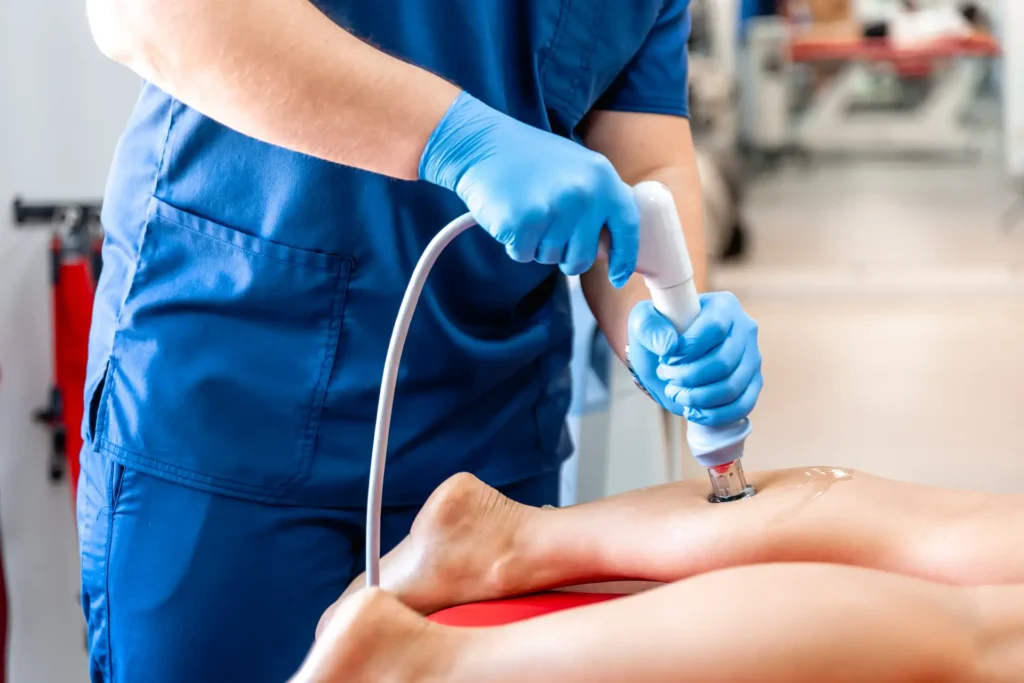
Shockwave therapy takes a more mechanical approach. Using the Sanuwave device, it delivers focused acoustic waves into the affected tissue. These waves create a stronger physical stimulus than cold laser.
The acoustic waves do several things: they break down scar tissue and calcium deposits, increase blood flow to areas with poor circulation, and activate the body’s own stem cells to begin regenerating damaged tissue. This makes shockwave especially powerful for chronic conditions where healing has stalled and scar tissue or calcification has built up.
Unlike cold laser, shockwave produces a noticeable sensation, a tapping or pulsing that some patients find mildly uncomfortable in the first session or two. That intensity is part of what makes it effective for the tough, stubborn conditions it targets.
Comparing the Two Directly
The Type of Stimulus
Cold laser uses light energy to influence cells gently. Shockwave uses mechanical acoustic waves to create a stronger physical effect. Light versus force, essentially. This difference is why they suit different situations.
Best for Acute vs Chronic
Cold laser often shines for acute injuries, inflammation, and nerve pain, where a gentle approach is ideal. Shockwave often shines for chronic, stubborn conditions where scar tissue and stalled healing need a stronger stimulus to break the cycle.
Sensation and Comfort
Cold laser is painless and produces little to no sensation. Shockwave produces a noticeable tapping sensation and occasional mild discomfort. Both are well-tolerated, but they feel quite different.
Conditions Each Treats Best
Cold laser is excellent for neuropathy, nerve pain, recent soft tissue injuries, arthritis inflammation, and post-surgical healing. Shockwave excels at plantar fasciitis, Achilles tendonitis, tennis and golfer’s elbow, frozen shoulder, hip bursitis, and other chronic tendon conditions.
Which One Is Right for Your Condition?
Here’s a practical way to think about it. If your problem involves nerve pain, recent inflammation, or an acute injury, cold laser is often the better starting point because of its gentle, anti-inflammatory action. Our post on plantar fasciitis relief with shockwave shows the kind of chronic, stubborn condition where shockwave tends to be the stronger choice.
If your problem is a chronic tendon issue that hasn’t responded to rest, stretching, or other treatment, especially one that’s been present for months or years, shockwave’s ability to break down scar tissue and jumpstart stalled healing usually makes it the better fit.
But here’s the important part: this isn’t always an either-or decision.
Why We Often Use Both Together
In my 23 years of practice, I’ve found that many conditions benefit from using cold laser and shockwave together rather than choosing one. They address different aspects of healing, and combining them can produce faster, more complete results.
For example, a chronic tendon injury might get shockwave to break down the scar tissue and stimulate deep regeneration, plus cold laser to reduce the inflammation and support cellular healing around it. The two work on different parts of the same problem.
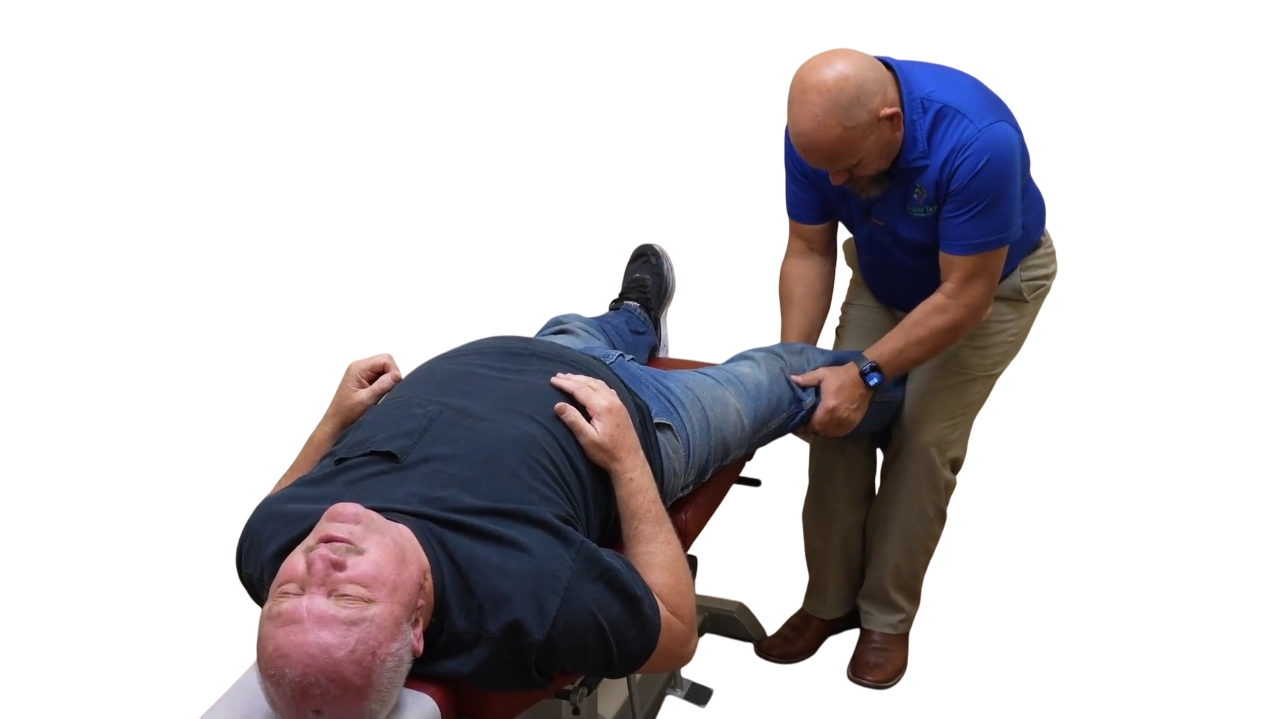
This combined approach is part of the R.E.S.T.O.R.E. Method we use at Family Tree Chiropractic. We do not guess. We test. After a thorough evaluation, we determine which treatments, alone or in combination, will best address your specific condition. We also add the adjustments, muscle work, and strengthening that keep the results lasting rather than temporary.
What to Expect at Your Evaluation
When you come in, we start with a comprehensive evaluation including a detailed history, orthopedic and neurological examination, and on-site digital X-rays when indicated. This tells us exactly what’s driving your problem and how it’s likely to respond to each treatment option.
From there, we’ll explain which therapy or combination we recommend and why, so you understand the reasoning rather than just being handed a treatment. With both cold laser and shockwave available in-house, along with the full range of chiropractic care, we can build a plan around what your body actually needs.
Frequently Asked Questions
Is shockwave therapy stronger than cold laser?
Shockwave produces a stronger physical stimulus and is generally better suited to chronic, stubborn conditions with scar tissue or calcification. Cold laser is gentler and better for acute injuries, inflammation, and nerve pain. Stronger isn’t always better, it depends on the condition.
Can I get both treatments at the same time?
Yes, and many patients do. The two therapies complement each other well, addressing different aspects of healing. We often combine them for chronic conditions where both scar tissue and inflammation are involved.
Do either of these treatments hurt?
Cold laser is painless with little to no sensation. Shockwave produces a tapping sensation and occasional mild discomfort in the first session or two, which fades as treatment progresses. Both are well-tolerated.
How many sessions will I need?
It depends on the condition and treatment. Both typically involve a series of sessions over several weeks. We provide a clear estimate after evaluating your specific situation.
Find Out Which Treatment Fits Your Condition
Rather than guessing whether you need cold laser, shockwave, or both, let us evaluate your condition and recommend the right approach. Family Tree Chiropractic in Oklahoma City offers both therapies in-house, so your treatment is built around what will actually help you heal.
Call us at (405) 340-4400 or book your appointment online. New patients start with our $49 comprehensive special, including consultation, adjustment, X-ray, cold laser, and a massage voucher.