
A bulging disc and a herniated disc are related but not the same. A bulging disc is when the disc extends outward beyond its normal boundary while its outer wall stays intact, like a tire bulging under pressure. A herniated disc is when that outer wall cracks and the softer inner material pushes through. Both can cause pain and nerve symptoms, but the distinction affects how they behave and how we treat them here in Oklahoma City. Here’s what you need to know.
Understanding Your Spinal Discs First
To understand the difference, it helps to know what a disc actually is. Between each pair of vertebrae in your spine sits an intervertebral disc. Think of it as a cushion with two parts: a tough, fibrous outer ring called the annulus, and a soft, gel-like center called the nucleus.
These discs absorb shock, allow your spine to bend and twist, and keep your vertebrae from grinding against each other. They’re under constant pressure from daily life, and over time or with injury, they can develop problems. The two most common are bulging discs and herniated discs.
What Is a Bulging Disc?
A bulging disc happens when the disc extends outward beyond its normal boundary, but the tough outer wall remains intact. The gel-like center hasn’t broken through. The disc is essentially being squeezed and pushing outward, like how a tire bulges when it’s under too much load.
Bulging discs are extremely common and often develop gradually as part of the aging process. Many people have bulging discs and never know it because they cause no symptoms at all. When a bulging disc does cause problems, it’s usually because it’s pressing on a nearby nerve or contributing to spinal narrowing.
Bulging discs tend to affect a broader area of the disc, and they’re generally considered the milder of the two conditions, though they can still cause significant pain when a nerve is involved.
What Is a Herniated Disc?
A herniated disc is a step further. Here, the tough outer wall of the disc actually cracks or tears, and the soft inner material pushes through the opening. You may also hear this called a ruptured disc or a slipped disc, though “slipped” is misleading since the disc doesn’t actually slip anywhere.
Because the inner material has escaped its normal container, herniated discs can cause more focused, intense symptoms. The escaped material can directly compress or irritate a nearby nerve root, and it can also trigger an inflammatory response that adds to the pain and nerve symptoms.
Herniated discs sometimes happen suddenly, from an injury or a specific movement like lifting something heavy the wrong way. Other times they develop from gradual wear that finally causes the weakened wall to give. Our post on herniated disc treatment in OKC goes deeper into how we approach these specifically.
How the Symptoms Compare
Both conditions can cause similar symptoms, which is part of why they get confused. Both can produce back or neck pain, and both can cause radiating pain, numbness, tingling, or weakness if a nerve is involved. Sciatica, for example, can result from either a bulging or herniated disc in the lower back.
The general difference is that herniated discs tend to cause more intense, focused symptoms because of the direct nerve compression and inflammation from the escaped disc material. Bulging discs may cause more diffuse, gradual symptoms, or none at all. But this isn’t a hard rule. A large bulging disc can cause severe symptoms, and a small herniation can be relatively mild.
This overlap is exactly why proper diagnosis matters and why you shouldn’t try to self-diagnose based on symptoms alone.
Why the Difference Matters for Treatment
Here’s the practical question: does the distinction change how the problem is treated? To some degree, yes, but both conditions respond well to the same core non-surgical approaches.
The good news is that the large majority of both bulging and herniated discs can be treated without surgery. The body has a remarkable ability to heal disc problems when given the right support, and surgery is genuinely necessary far less often than many people fear.
Spinal Decompression
For both conditions, spinal decompression therapy is often central to treatment. It creates negative pressure within the disc, which helps draw the bulging or herniated material back inward and pulls in nutrient-rich fluid to support healing. For a herniated disc, this can help reduce the pressure on the nerve. For a bulging disc, it can reduce the outward bulge.
Chiropractic Adjustments and Supporting Care
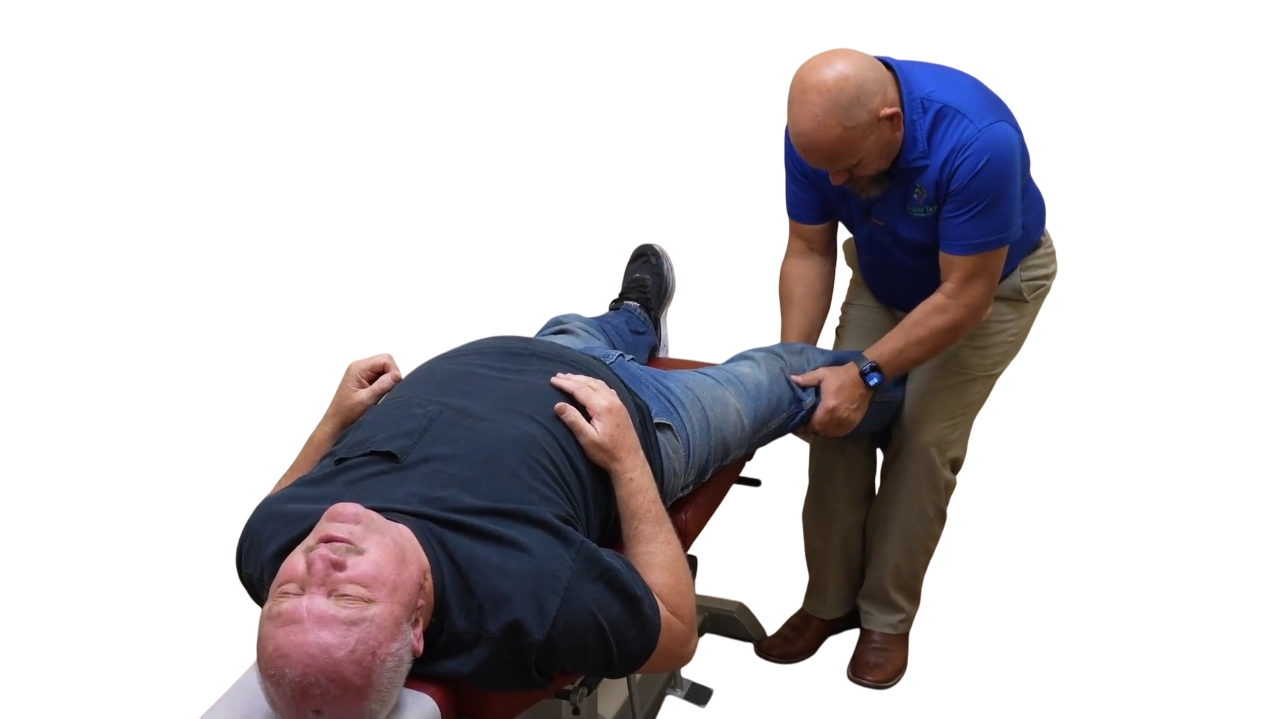
Restoring proper movement to the spine reduces the mechanical stress on the affected disc and helps the surrounding structures function correctly. Combined with cold laser to reduce inflammation and targeted strengthening to support the spine, this addresses both the disc problem and the factors around it.
The severity, location, and your specific symptoms guide exactly how we tailor the treatment, which matters more than the bulging-versus-herniated label alone. This reflects the R.E.S.T.O.R.E. Method: find the true root cause, address it, and strengthen the area so the problem doesn’t return.
Getting an Accurate Diagnosis
Because bulging and herniated discs overlap in symptoms and both can range from mild to severe, accurate diagnosis is essential. We do not guess. We test.
When you come in with suspected disc-related back pain, our evaluation includes a detailed history, thorough orthopedic and neurological testing, and on-site digital X-rays. If advanced imaging like an MRI is needed to confirm the nature of the disc problem, we’ll coordinate that. With 23 years of experience and certification in spinal trauma from the International Chiropractors Association, I take diagnosis seriously, because the right treatment depends on understanding exactly what’s going on.
Frequently Asked Questions
Is a bulging disc less serious than a herniated disc?
Generally, a bulging disc is considered the milder condition since the disc wall is still intact. But severity depends more on whether a nerve is involved and how much, than on the label itself. A large bulging disc can cause more problems than a small herniation.
Can a bulging disc become a herniated disc?
Yes. A bulging disc represents a weakened, stressed disc, and continued stress can eventually cause the wall to tear, resulting in a herniation. This is one reason addressing a bulging disc early is worthwhile.
Do herniated and bulging discs require surgery?
In most cases, no. The large majority of both conditions respond well to non-surgical treatment like spinal decompression and chiropractic care. Surgery is reserved for severe cases with progressive neurological problems that don’t respond to conservative care.
How do I know which one I have?
Only a proper evaluation, sometimes including imaging, can accurately determine whether you have a bulging or herniated disc. The symptoms overlap too much to know for certain on your own.
Get Clarity on Your Disc Problem
Whether it’s a bulging disc, a herniated disc, or something else entirely, the first step is knowing exactly what you’re dealing with. Family Tree Chiropractic in Oklahoma City provides thorough evaluation and proven non-surgical treatment for both conditions.
Call us at (405) 340-4400 or book your appointment online. New patients start with our $49 comprehensive special, including consultation, adjustment, X-ray, cold laser, and a massage voucher.