Cold laser therapy and traditional physical therapy are both legitimate tools for treating pain and injury, but they work through completely different mechanisms and are best suited to different situations. In many cases, the question isn’t which one to choose – it’s understanding what each does well, and why combining them often produces faster and more lasting results than either approach alone. At Family Tree Chiropractic in Oklahoma City, we use cold laser therapy as part of a comprehensive care approach, and it consistently speeds up outcomes compared to manual therapy alone.
What Is Cold Laser Therapy?
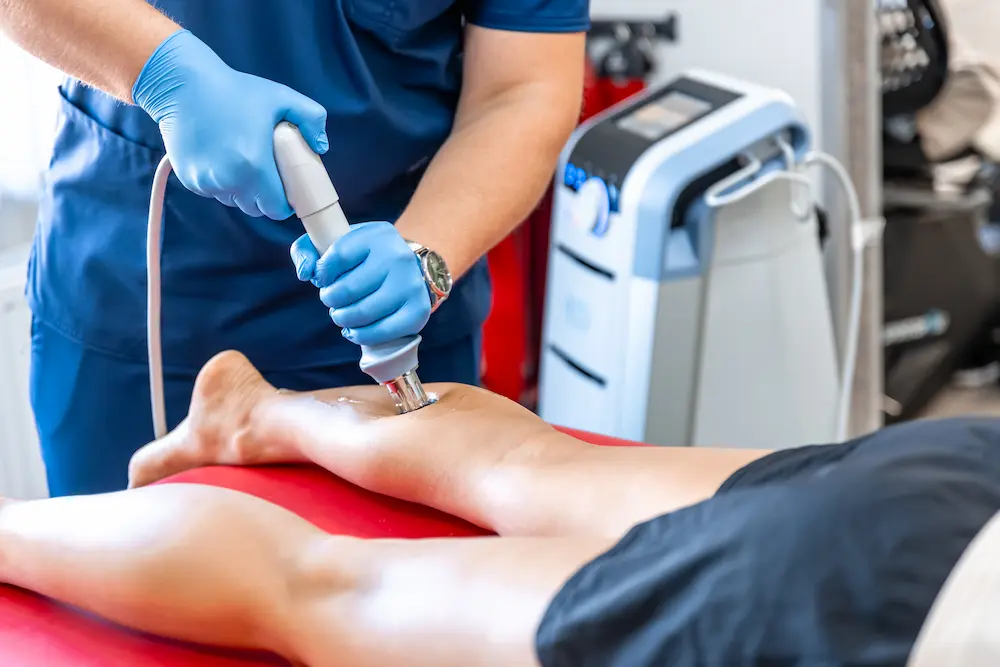
Cold laser therapy, also called low-level laser therapy (LLLT) or photobiomodulation, uses specific wavelengths of light to penetrate into damaged tissue and stimulate a biological healing response. The laser doesn’t generate heat at the tissue level (hence “cold”), so there’s no burning or discomfort during the treatment.
At the cellular level, the light energy is absorbed by the mitochondria of the cells in the treatment area. This triggers increased production of ATP (cellular energy), which accelerates tissue repair, reduces inflammation, and promotes regeneration of damaged cells. Think of it as turning up the volume on your body’s own healing process.
The FDA has cleared cold laser therapy for pain relief and adjunctive treatment of musculoskeletal conditions. It’s been used in clinical settings for several decades, and the research supporting its effectiveness for pain, inflammation, and tissue repair is well-established.
What Traditional Physical Therapy Does Well
Traditional physical therapy uses manual techniques, therapeutic exercise, and modalities like ultrasound or electrical stimulation to address pain, restore function, and rebuild strength after injury or surgery.
Where PT excels is in the rehabilitation and strengthening phase. If you’ve had a surgery, a significant injury, or significant functional deficits, structured exercise programming and manual therapy are genuinely effective tools for rebuilding capacity. A good physical therapist teaches patients how to move correctly and builds the strength that protects against re-injury.
That said, traditional PT has a real limitation: most of what it does is mechanical. It moves tissues, stretches structures, and builds muscle. It doesn’t directly address the cellular healing process in damaged tissue the way cold laser does.
Where Cold Laser Therapy Has a Clear Edge
The biggest advantage of cold laser therapy is speed of healing at the tissue level. For conditions involving acute or chronic inflammation, soft tissue damage, or nerve irritation, cold laser accelerates the healing timeline in ways that manual therapy simply can’t match.
Here’s what I tell patients: physical therapy can help you move better and get stronger, but if the underlying tissue is still inflamed and damaged, you’re often working against your own healing. Cold laser addresses that underlying tissue environment directly, which means the manual work and exercise programming works better and faster when laser therapy is part of the picture.
In my 23 years of treating patients at our Oklahoma City practice, the conditions that respond most dramatically to cold laser include:
- Acute and chronic nerve pain, including sciatica
- Soft tissue injuries from auto accidents and sports
- Tendonitis and ligament sprains
- Disc-related inflammation
- Post-surgical tissue healing
- Arthritis and degenerative joint conditions
- Neuropathy
For those conditions, cold laser consistently produces faster pain relief and better outcomes than manual therapy approaches used alone.
Where Traditional PT Still Wins
There are situations where the exercise and functional rehabilitation components of traditional PT are the most important element. Post-surgical rehab is a good example. After a joint replacement or major orthopedic surgery, rebuilding strength, range of motion, and movement patterns requires a systematic exercise progression that cold laser therapy doesn’t provide on its own.
The same is true for chronic conditions driven primarily by weakness, poor movement patterns, or sedentary lifestyle. If the core of your problem is that your stabilizer muscles aren’t doing their job, no amount of laser is going to fix that. You need to build the strength.
This is actually why the R.E.S.T.O.R.E. Method at Family Tree Chiropractic includes both. We use cold laser to address the tissue environment and accelerate healing, and we use targeted strengthening and neuromuscular re-education to build the physical foundation that keeps the problem from returning.
The Combined Approach: Why It Usually Wins
The patients who get the best outcomes are almost never the ones who used a single tool. They’re the ones who received care that addressed the injury from multiple angles at once.
At our practice, a typical patient with, say, chronic neck pain from a disc issue or old accident injury might receive:
- Cold laser therapy to reduce nerve inflammation and speed tissue repair
- Chiropractic adjustments to restore proper joint movement and reduce nerve irritation
- Massage therapy to release muscle guarding and improve circulation
- Targeted exercises to rebuild the stabilizer muscles protecting the cervical spine
Each of those components addresses a different aspect of the problem. The laser handles the cellular healing and inflammation. The adjustment handles the mechanical dysfunction. The massage handles the muscular response. The exercise handles the long-term stability. Together, they move the needle faster and produce results that hold.
A Comparison Patients Can Actually Use
If you’re trying to decide where to start or whether cold laser is worth adding to your current care, here’s a practical way to think about it:
If your primary complaint is pain and inflammation from an injury, degeneration, or nerve condition – cold laser therapy should be a core part of your treatment plan, not an afterthought. The tissue-level healing it produces sets the stage for everything else to work better.
If your primary complaint is weakness, poor movement, or difficulty returning to function after surgery or a long period of inactivity – structured rehabilitation exercise is essential. But adding cold laser still speeds up the tissue healing that supports the rehab work.
In most cases we see at our OKC clinic, patients benefit from both. We do not guess. We test. After a thorough evaluation, we’ll tell you exactly which components of care make the most sense for your specific situation.
What to Expect During Cold Laser Therapy
Cold laser treatments are straightforward. You lie comfortably while the handheld laser device is passed over the treatment area. Sessions typically take a few minutes, sometimes longer for larger or more complex areas. There’s no pain during the treatment. Many patients feel warmth or a mild tingling sensation, and some notice reduced pain or increased ease of movement the same day.
The cumulative effects build over multiple sessions. Most patients see meaningful changes within four to eight treatments, though this varies based on the severity and chronicity of the condition. Acute injuries tend to respond faster. Long-standing chronic conditions take a bit more time.
You can read about how our overall treatment timelines work and what to expect at different stages in our post on how long chiropractic treatment takes for common conditions.
Frequently Asked Questions
Is cold laser therapy covered by insurance?
Coverage varies by plan. Some insurance plans cover cold laser as part of a comprehensive chiropractic care plan; others classify it as a supplemental service. We’ll help you understand your specific coverage at your first visit.
Can I receive cold laser and chiropractic care at the same visit?
Yes, and that’s often how we schedule it. Cold laser before an adjustment helps the tissue respond better. Cold laser after an adjustment helps the body maintain the correction. The sequencing matters and we pay attention to it.
Is cold laser safe for everyone?
Cold laser therapy is generally very safe and well-tolerated. There are a small number of contraindications, including over active cancer sites and directly over the eyes. At your evaluation, we’ll review your full health history to confirm it’s appropriate for you.
Ready to Experience the Difference?
If you’ve been in traditional physical therapy without the progress you were hoping for, or if you’re dealing with pain from an injury, chronic condition, or neck pain that isn’t responding to standard care, cold laser therapy may be exactly what’s been missing. Family Tree Chiropractic in Oklahoma City offers a comprehensive approach that combines laser therapy with the other tools that produce lasting results.
Call us at (405) 340-4400 or book your appointment online. New patients start with our $49 special, which includes consultation, adjustment, X-ray, cold laser, and a massage voucher – so you’ll experience the laser firsthand on your very first visit.