
Frozen shoulder treatment doesn’t have to mean months of frustration and limited mobility. At Family Tree Chiropractic in Oklahoma City, Dr. Micah Carter uses shockwave therapy to break down the scar tissue that’s locking up your shoulder—and patients are getting their range of motion back in weeks, not years.
I call shockwave therapy one of the best treatments I’ve ever seen, and frozen shoulder is exactly why. The results speak for themselves.
What Frozen Shoulder Actually Feels Like
If you have frozen shoulder, you know it’s more than just stiffness. It’s the inability to reach behind your back to tuck in your shirt. It’s waking up at night because you rolled onto that shoulder. It’s realizing you can’t lift your arm high enough to grab something off a shelf.
The medical term is adhesive capsulitis. Your shoulder capsule—the connective tissue surrounding the joint—thickens and tightens. Scar tissue develops. Range of motion decreases, sometimes dramatically.
Patients describe three stages, though they don’t always happen in a neat progression:
- Freezing stage: Pain increases, movement becomes limited
- Frozen stage: Pain may improve slightly, but stiffness is severe
- Thawing stage: Range of motion gradually returns
Here’s the problem: the “thawing” stage can take 12 to 18 months if you just wait it out. That’s a long time to avoid activities you love or struggle with basic tasks like putting on a coat.
Why Physical Therapy Alone Often Isn’t Enough
Most people with frozen shoulder start with physical therapy. They’re told to do stretches, use resistance bands, and work through the discomfort. And physical therapy absolutely has value—when the tissue is ready for it.
But if thick scar tissue has formed in the shoulder capsule, stretching alone isn’t going to break it down effectively. You’re essentially pulling against adhesions that won’t release without more aggressive intervention.
At our practice, we see people who’ve done months of PT with minimal improvement. They’re frustrated because they worked hard at their exercises but still can’t lift their arm above shoulder height. That’s when combining shockwave therapy with targeted movement becomes the answer.
How Shockwave Therapy Works for Frozen Shoulder
Shockwave therapy uses high-energy acoustic waves to stimulate healing in damaged tissue. For frozen shoulder, it does three critical things:
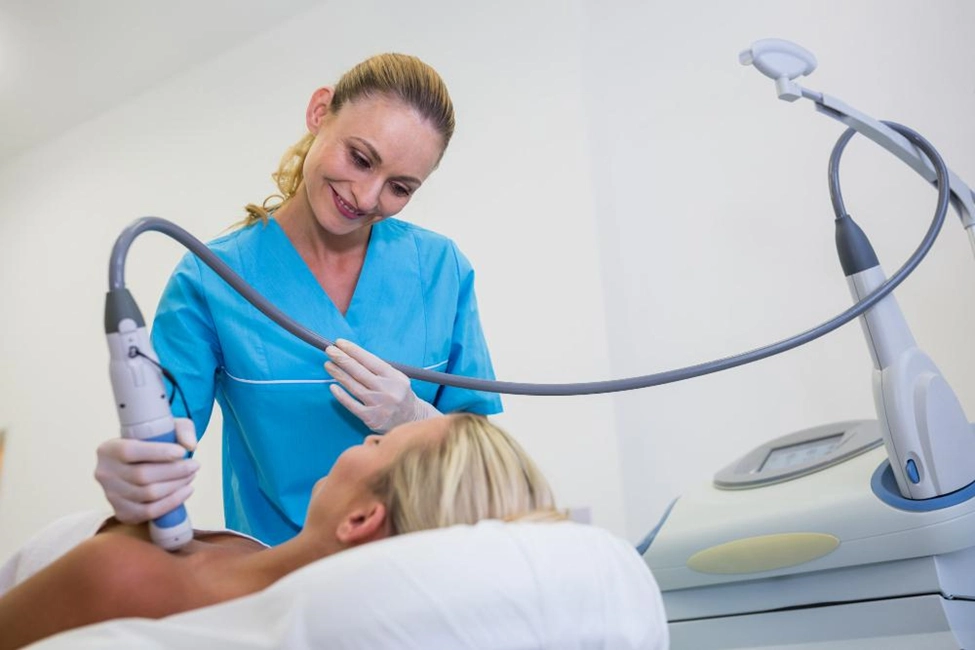
Breaks down scar tissue and adhesions. The shockwaves create microtrauma in the thickened capsule tissue, which triggers your body’s natural healing response. Over time, this breaks apart the adhesions that are restricting movement.
Increases blood flow. Better circulation means more oxygen and nutrients reaching the damaged tissue. This accelerates healing and reduces inflammation in the shoulder joint.
Reduces pain. Shockwave therapy affects pain receptors and nerve endings, providing relief while the healing process happens.
I’ve treated hundreds of frozen shoulder cases, and the transformation is often dramatic. People who couldn’t reach across their body to buckle a seatbelt are back to full overhead motion within weeks.
What Treatment Looks Like at Family Tree Chiropractic
We start with a thorough evaluation to confirm frozen shoulder and rule out other conditions like rotator cuff tears or shoulder impingement. Range of motion testing shows exactly where you’re limited. Sometimes we use X-rays to make sure there’s no underlying structural issue.
Once we’ve confirmed adhesive capsulitis, we build a treatment plan. Shockwave therapy sessions typically run 10-15 minutes. The treatment isn’t painful, though you’ll feel the shockwaves as they’re delivered to the affected area.
Most patients need 6-8 sessions over several weeks. We combine shockwave with gentle chiropractic adjustments to ensure the shoulder joint, neck, and upper back are all moving correctly. Poor mechanics in the spine often contribute to shoulder problems, so we address the whole system.
As range of motion improves, we add specific exercises and stretches. This is where the work you do at home matters—shockwave breaks down the scar tissue, but you need to restore movement patterns so the shoulder doesn’t stiffen back up.
Real Results: What Patients Experience
A woman came to our clinic after dealing with frozen shoulder for seven months. She couldn’t brush her hair, couldn’t reach into the back seat of her car, and had stopped playing tennis entirely. Her doctor told her it would resolve on its own eventually, but “eventually” wasn’t cutting it.
After four shockwave sessions, she had noticeably more range of motion. By session eight, she was back on the tennis court. Not at 100% yet, but playing—which she thought was months away.
That’s the pattern we see consistently. Week by week, patients regain inches of movement. Activities that were impossible become difficult, then manageable, then normal again.
I love these cases because the improvement is so measurable. You can literally watch someone’s arm rise higher each visit.
Other Treatments We Use Alongside Shockwave
While shockwave is the centerpiece for frozen shoulder, we often incorporate other therapies to speed recovery:
Chiropractic Adjustments
Your shoulder doesn’t work in isolation. If your mid-back or cervical spine is misaligned, it affects shoulder mechanics. Adjustments restore proper joint function and take unnecessary stress off the healing shoulder.
Massage Therapy
The muscles surrounding a frozen shoulder—rotator cuff, deltoid, upper trapezius—get tight and overworked trying to compensate for limited motion. Massage therapy releases that tension and improves tissue quality.
Cold Laser Therapy
Cold laser reduces inflammation and accelerates tissue healing at the cellular level. It works beautifully in combination with shockwave for stubborn cases.
Neuromuscular Re-Education
Once range of motion improves, we need to retrain the shoulder to move correctly. Your brain has been compensating for months, creating movement patterns that protect the frozen shoulder. We work on re-establishing normal patterns so you don’t develop secondary issues.
Who Gets Frozen Shoulder (And Why)
Frozen shoulder affects women more often than men, typically between ages 40 and 60. We see it frequently in patients who:
- Have diabetes (significantly higher risk)
- Recently had shoulder immobilization from injury or surgery
- Have thyroid disorders
- Experienced prolonged immobility from any cause
Sometimes it develops without any clear trigger. You wake up one day with shoulder pain, and over weeks it progresses into severe stiffness.
The good news is that treatment works regardless of why it developed. Shockwave therapy breaks down adhesions whether they formed after surgery or appeared spontaneously.
Why Waiting It Out Isn’t Your Best Option
Some doctors still tell patients that frozen shoulder will resolve on its own given enough time. And technically, that’s true for many people. But “resolving” can take 18 months to 3 years, and you may not regain full range of motion even then.
As a former teacher, I believe in patient education: you have options. Waiting is an option, but it’s not your only one. Active treatment with shockwave therapy can dramatically shorten your recovery timeline and improve your final outcome.
I’ve seen too many people lose a year or more of activities they love—golf, swimming, yard work, playing with grandkids—because they thought they just had to tough it out. You don’t.
When to Seek Treatment
If you’ve had progressive shoulder stiffness and pain for more than a few weeks, get evaluated. Early intervention tends to work faster than waiting until you’ve been frozen for months.
Red flags that warrant immediate attention:
- Sudden inability to move your shoulder after an injury
- Severe pain that doesn’t improve with rest
- Visible deformity in the shoulder
- Weakness accompanied by numbness down your arm
These could indicate rotator cuff tears, nerve compression, or other conditions that need different treatment approaches.
Getting Back to Normal Life
The goal isn’t just increased range of motion on a measurement chart. It’s getting back to the life you had before frozen shoulder took over.
That means reaching overhead to put dishes away without thinking about it. Rolling over in bed without waking up in pain. Getting dressed in the morning without strategic planning. Playing golf, swimming, doing home improvement projects—whatever matters to you.
At Family Tree Chiropractic, we’ve helped hundreds of Oklahoma City patients get past frozen shoulder and back to full function. The R.E.S.T.O.R.E. method works because we’re not just treating symptoms—we’re addressing the scar tissue and adhesions at the root of the problem, then retraining your body to move correctly.
Frequently Asked Questions
How many shockwave sessions does frozen shoulder need?
Most patients see significant improvement within 6-8 sessions spread over several weeks. Some cases need more, particularly if you’ve had frozen shoulder for over a year. We reassess progress throughout treatment and adjust as needed.
Is shockwave therapy painful for frozen shoulder?
Most patients describe it as tolerable discomfort, not pain. You’ll feel the pulses as they’re delivered, but it shouldn’t be excruciating. We adjust intensity based on your comfort level.
Can frozen shoulder come back after treatment?
Recurrence in the same shoulder is rare. However, about 10-20% of people develop frozen shoulder in the opposite shoulder at some point. The good news is that you’ll know the signs early and can seek treatment immediately.
Will insurance cover shockwave therapy?
Coverage varies by insurance plan. We can verify your benefits and discuss payment options during your consultation. Many patients find it worth paying out of pocket given how much faster recovery happens compared to waiting it out.
Tired of waiting for your frozen shoulder to “thaw” on its own? Schedule your $49 new patient consultation with Dr. Carter in Oklahoma City or call (405) 340-4400. Let’s get your shoulder moving again.