

Sciatica treatment in Oklahoma City doesn’t have to mean managing pain for the rest of your life. At Family Tree Chiropractic, Dr. Micah Carter, DC uses a comprehensive approach to find what’s actually causing your sciatica and fix it at the source—not just cover up the symptoms with medication.
I’ve treated thousands of sciatica patients in my 23 years of practice. The ones who get lasting relief aren’t the ones who settle for temporary fixes. They’re the ones willing to dig deeper and address the real problem.
What Sciatica Actually Is (And Why It Keeps Coming Back)
Sciatica isn’t a condition. It’s a symptom. The sciatic nerve is the longest nerve in your body, running from your lower back down through your hips, buttocks, and legs. When something irritates or compresses that nerve, you get sciatica.
Here’s what patients tell us: shooting pain down the leg, numbness in the foot, burning sensations in the calf, or weakness that makes climbing stairs feel impossible. Some describe it as an electric shock. Others say it’s a deep ache that never quite goes away.
But here’s the thing—that pain is just a signal. Your body is telling you something upstream is wrong.
Why Pills and Rest Don’t Fix Sciatica
Most people with sciatica start with the same path: ibuprofen, muscle relaxers, maybe a heating pad. Their doctor tells them to rest and avoid activities that make it worse. Sometimes they feel better for a few days or weeks.
Then it comes back. Often worse than before.
The reality is that medication doesn’t address why your sciatic nerve is compressed in the first place. If a herniated disc is pushing on the nerve, anti-inflammatories might reduce some swelling, but they’re not fixing the disc. If your piriformis muscle is tight and pressing on the nerve, muscle relaxers might take the edge off, but they’re not retraining that muscle to function correctly.
At our practice, we see people who’ve been managing sciatica with pills for months or years. They’re frustrated because they did everything they were told, but the pain keeps cycling back. That’s when they realize they need a different approach.
Finding the Actual Source: How We Test for Sciatica
“We don’t guess. We test.” That’s not just something I say—it’s how we approach every sciatica case that walks through our door.
Your evaluation starts with a detailed history. When did the pain start? What makes it better or worse? Have you had any injuries, even minor ones? Does the pain change when you sit, stand, or bend forward? These details matter because sciatica from a herniated disc feels different than sciatica from piriformis syndrome or spinal stenosis.
Then we do a physical exam with specific orthopedic and neurological tests. We’re checking nerve function, muscle strength, reflexes, and range of motion. We use on-site digital X-rays when needed to see what’s happening with your spine structurally.
As a former teacher, I believe in making sure every patient understands exactly what we find. I’ll show you your X-rays, explain which disc or muscle is causing the nerve compression, and walk you through why you’re feeling pain in specific areas. No medical jargon you have to Google later.
Treatment Options That Target the Cause
Once we know what’s causing your sciatica, we build a treatment plan using the R.E.S.T.O.R.E. method—our proven system for taking pain away quickly while also addressing the underlying problem so it doesn’t come back.
Chiropractic Adjustments
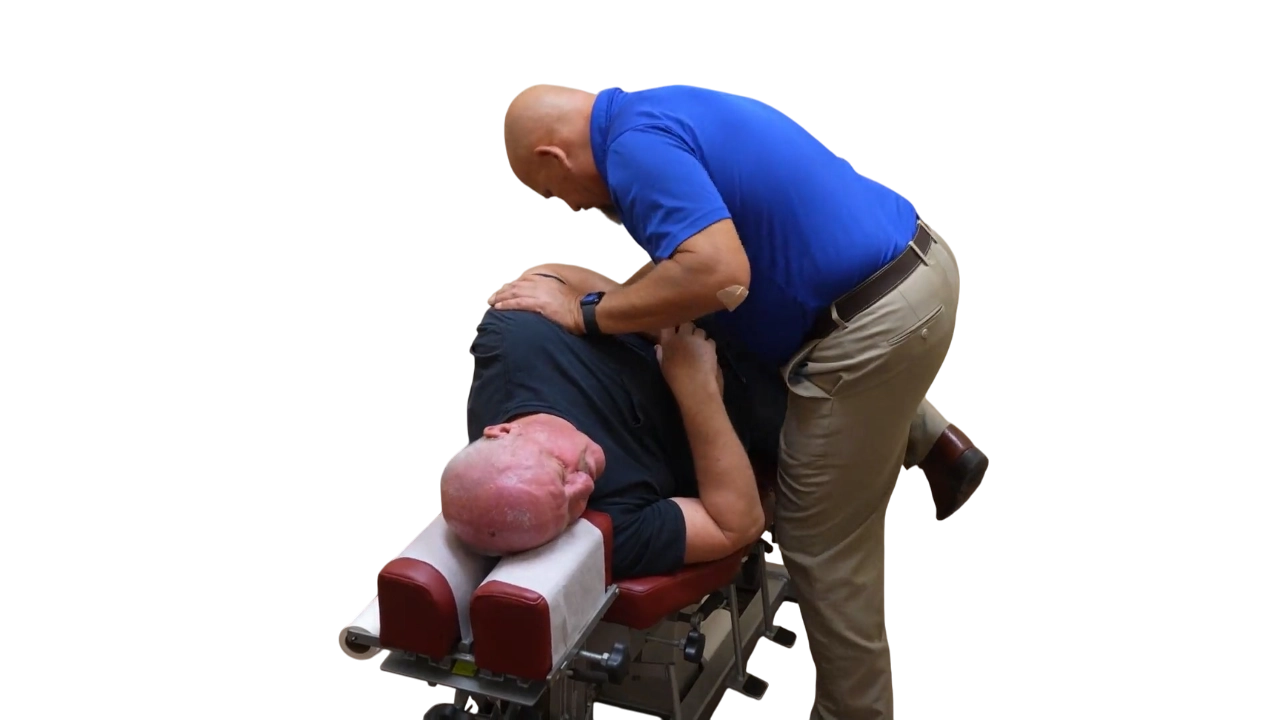
Spinal adjustments restore proper alignment and reduce nerve interference. When vertebrae are misaligned, they can narrow the spaces where nerves exit the spine. Gentle, specific adjustments create more room for the sciatic nerve and reduce inflammation around the affected area.
Many patients notice improvement after their first few adjustments. But we’re not just chasing short-term relief—we’re working on the mechanical problem that created the sciatica in the first place.
Spinal Decompression for Disc-Related Sciatica
If your sciatica stems from a herniated or bulging disc, spinal decompression is often the most effective treatment. This non-surgical therapy gently stretches the spine, creating negative pressure inside the disc. That negative pressure can help pull herniated material back into place and allows nutrients and oxygen to flow into the disc, promoting healing.
Shockwave Therapy for Piriformis-Related Sciatica
Not all sciatica comes from the spine. Sometimes the piriformis muscle in your hip gets tight or develops trigger points that compress the sciatic nerve as it passes underneath. This is called piriformis syndrome, and it’s one of my favorite conditions to treat because shockwave therapy works so well for it.
Shockwave breaks down scar tissue and adhesions in the piriformis muscle while stimulating blood flow and healing. I’ve seen patients who’ve had piriformis-related sciatica for years get dramatic relief within a few weeks of treatment. It’s one of the best therapies available for stubborn muscle-related nerve compression.
Massage Therapy and Muscle Work
Tight muscles don’t just contribute to nerve compression—they also develop as a protective response to pain. Massage therapy helps release that tension, improves circulation, and allows your body to heal more effectively. Our licensed massage therapists work directly with the treatment plan we’ve designed for your specific case.
Neuromuscular Re-Education
Here’s what most people don’t realize: sciatica often develops because certain muscles aren’t firing correctly. Maybe your core is weak, or your glutes aren’t engaging like they should, so other muscles compensate and create imbalances that lead to nerve compression.
We use neuromuscular re-education to retrain those muscle patterns. This is the part of the R.E.S.T.O.R.E. method that prevents sciatica from coming back after we’ve resolved the immediate pain.
What to Expect During Treatment
Most patients see improvement within the first few weeks, but I’m always honest about timelines: chronic sciatica that’s been going on for months or years takes longer to correct than acute sciatica that just started.
We typically recommend starting with 2-3 visits per week for the first few weeks. As you improve, we space appointments out. The goal is to get you to a maintenance schedule where you’re coming in periodically to keep everything functioning well, not constantly managing pain.
You should be able to do more each week—walk farther, sit longer, sleep through the night without waking up from leg pain. If you’re not seeing measurable progress, we reassess and adjust the treatment plan.
When Sciatica Needs Immediate Medical Attention
Chiropractic care is highly effective for most sciatica cases, but some situations require urgent medical evaluation. Seek emergency care if you experience:
- Loss of bladder or bowel control (this can indicate cauda equina syndrome, a surgical emergency)
- Sudden, severe weakness in your leg
- Progressive numbness in your groin or inner thighs
- Sciatica after significant trauma like a car accident or fall
These are rare, but they’re important to recognize. We’re here to help people get better, and sometimes that means directing them to the right specialist for their specific situation.
Getting Back to What You Love
A patient told me recently that she’d stopped planning anything more than two weeks out because she never knew if her sciatica would be flaring up. She’d given up her morning walks, quit playing with her grandkids on the floor, and stopped going to her book club because sitting for an hour was too painful.
Three months into treatment, she’s back to all of it. That’s what we’re after at Family Tree—not just reducing your pain score from an 8 to a 6, but getting you back to living your life without constantly thinking about your back.
Whether it’s yard work, biking, golf, or just being able to pick up your kid without wincing, that’s the goal. Finding the root cause, fixing it, and preventing it from stealing more time from you.
Frequently Asked Questions
How long does sciatica last with chiropractic treatment?
Many patients notice improvement within 2-4 weeks, but full resolution depends on what’s causing the sciatica and how long you’ve had it. Acute sciatica (a few weeks old) typically responds faster than chronic sciatica that’s been present for months or years.
Can sciatica be cured permanently?
If we identify and correct the underlying cause—whether that’s a herniated disc, misalignment, or muscle imbalance—yes, sciatica can be resolved long-term. The key is addressing the root problem, not just managing symptoms.
Is walking good for sciatica?
Light walking is often helpful once the acute pain has decreased. It promotes blood flow and keeps muscles from getting too tight. That said, listen to your body—if walking makes your symptoms significantly worse, that’s information we need to adjust your treatment plan.
Should I use heat or ice for sciatica?
Ice is typically better in the first 48-72 hours if there’s acute inflammation. After that, heat can help relax tight muscles. But here’s the thing: ice and heat are temporary comfort measures. They’re not fixing the problem causing the nerve compression.
Ready to find out what’s actually causing your sciatica? Schedule your $49 new patient consultation at Family Tree Chiropractic in Oklahoma City or call (405) 340-4400. Let’s test, not guess.