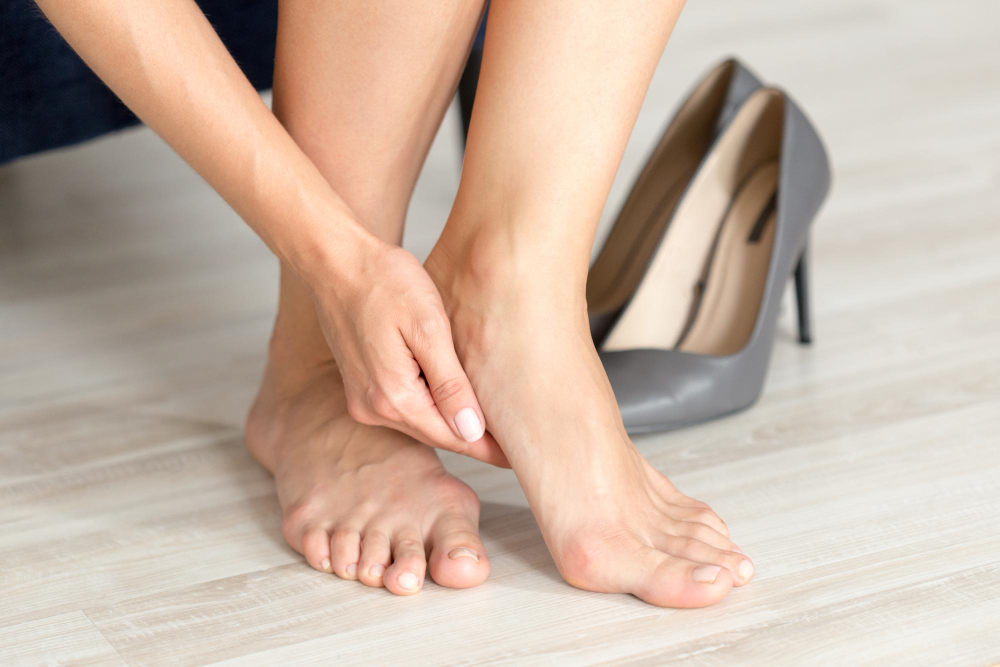
Achilles tendonitis responds exceptionally well to shockwave therapy, with most patients experiencing significant pain reduction within 3-4 treatments. At Family Tree Chiropractic in Oklahoma City, Dr. Micah Carter uses the Sanuwave device to break down chronic inflammation and scar tissue in the Achilles tendon, stimulating natural healing without surgery or lengthy downtime. Runners, athletes, and active individuals typically return to their activities within 4-6 weeks.
What Is Achilles Tendonitis?
Your Achilles tendon is the thick band of tissue connecting your calf muscles to your heel bone. It’s the strongest tendon in your body, but also one of the most frequently injured.
Achilles tendonitis happens when this tendon gets inflamed from overuse, repetitive stress, or sudden increases in activity. You feel pain and stiffness along the back of your ankle, especially in the morning or after exercise.
The condition comes in two forms. Insertional Achilles tendonitis affects the lower portion where the tendon attaches to your heel bone. Non-insertional Achilles tendonitis affects the middle portion of the tendon. Both respond well to shockwave therapy, though treatment protocols differ slightly.
Common Causes of Achilles Tendonitis
I see Achilles tendonitis constantly in my Oklahoma City practice. Runners who suddenly increase their mileage. Weekend warriors who go from sedentary to intense activity. Middle-aged athletes whose tendons aren’t as resilient as they used to be.
Tight calf muscles put excessive strain on the Achilles tendon. Poor footwear without adequate support contributes. Sudden increases in training intensity or duration overload the tendon before it can adapt.
Biomechanical issues like overpronation or flat feet also play a role. When your foot rolls inward excessively, it twists the Achilles tendon with every step. Over time, this repetitive stress causes inflammation and tissue damage.
Why Traditional Treatments Often Fail
Most people try rest, ice, compression, and elevation first. That’s fine for acute injuries, but chronic Achilles tendonitis needs more.
Physical therapy helps some patients. Eccentric strengthening exercises can promote healing in the tendon. But progress is slow, taking months to see significant improvement. Many patients plateau without reaching full recovery.
Cortisone injections are risky for Achilles tendonitis. Research shows that injecting cortisone directly into or near the Achilles tendon can weaken it and increase rupture risk. I’ve seen patients whose tendons ruptured months after cortisone injections.
The Chronic Inflammation Problem
When Achilles tendonitis becomes chronic, the tissue changes. Instead of acute inflammation that heals, you develop chronic degeneration with scar tissue formation.
The tendon loses its organized collagen structure. Blood flow decreases. The tissue becomes less resilient and more prone to re-injury. Traditional treatments that work for acute injuries don’t address this chronic degenerative process.
That’s where shockwave therapy changes everything. It actually reverses the chronic degenerative changes in the tendon.
How Shockwave Therapy Heals Achilles Tendonitis
Shockwave therapy delivers focused acoustic waves directly into the damaged Achilles tendon. These waves create controlled microtrauma that triggers your body’s healing response.
The treatment breaks down scar tissue and calcification that developed in the chronically inflamed tendon. It increases blood flow to the area, bringing nutrients and oxygen needed for healing. It also activates stem cells and growth factors that promote tissue regeneration.
The Sanuwave device we use at Family Tree Chiropractic is specifically designed for musculoskeletal conditions. The focused acoustic waves penetrate deep into the Achilles tendon, reaching areas that other treatments can’t.
What Happens During Treatment
Each shockwave session takes just 5-10 minutes. You sit or lie comfortably while I apply the Sanuwave handpiece to your Achilles tendon area.
You’ll feel pulsing or tapping sensations as the device delivers the acoustic waves. Some spots are more tender than others, especially where the most damage exists. The discomfort is tolerable and lasts only during the active treatment.
Most patients need 4-6 treatments spaced about a week apart. Some chronic cases require more sessions. We evaluate your progress after each treatment and adjust the plan accordingly.
Results You Can Expect
Many patients notice improvement after the first or second treatment. Pain decreases, morning stiffness reduces, and you can walk with less discomfort.
Full healing takes 4-8 weeks depending on severity. During this time, the shockwave therapy continues working even between sessions. The stimulated healing response builds over time.
I had a runner who’d been dealing with Achilles tendonitis for over a year. She’d tried everything: rest, physical therapy, orthotics, different shoes. Nothing worked long-term. After four shockwave treatments, her pain dropped from a 7 to a 2. She’s back running 20-30 miles per week without problems.
Long-Lasting Relief
Because shockwave therapy promotes actual tissue healing and regeneration, the benefits last. You’re not masking symptoms with medication or managing pain indefinitely.
The regenerated tendon tissue is healthier and more resilient than the chronically inflamed tissue it replaced. Patients who complete their full treatment series typically maintain improvement for years.
Some athletes need occasional maintenance treatments during heavy training periods. But nothing like the constant management required with other approaches.
Combining Shockwave with Other Therapies
Shockwave therapy works even better when combined with other treatments. At Family Tree Chiropractic, we use a comprehensive approach to address all factors contributing to your Achilles tendonitis.
If biomechanical issues are contributing, we correct those with chiropractic adjustments. Ankle and foot misalignments get addressed. Hip and lower back problems that affect your gait get corrected.
Tight calf muscles need release work. Our massage therapists use deep tissue techniques to reduce muscle tension pulling on the Achilles tendon. This allows the tendon to heal without constant stress.
Eccentric Strengthening Exercises
I provide specific exercises to do at home between shockwave treatments. Eccentric heel drops are particularly effective for Achilles tendonitis.
These exercises lengthen the calf muscles and Achilles tendon under load. Research shows this promotes proper collagen alignment as the tendon heals. The combination of shockwave therapy and eccentric exercises produces better results than either treatment alone.
I teach you exactly how to perform these exercises correctly. Done wrong, they can aggravate the condition. Done right, they accelerate healing.

Who Benefits Most from Shockwave Therapy
Runners and athletes with chronic Achilles tendonitis are ideal candidates. If you’ve tried rest, physical therapy, and other conservative treatments without lasting improvement, shockwave therapy likely will help.
The treatment works best for chronic cases that have been present for at least 6-8 weeks. Acute Achilles injuries less than a few weeks old typically respond well to rest and basic treatment without needing shockwave therapy.
People who want to avoid surgery or can’t take extended time off from their activities benefit significantly. Shockwave therapy gets you better faster than traditional conservative treatment and helps you avoid surgical intervention.
When Surgery Might Be Necessary
Most Achilles tendonitis cases respond to conservative treatment including shockwave therapy. Surgery becomes necessary only when the tendon is severely degenerated or partially ruptured.
Complete Achilles ruptures obviously require surgical repair. But chronic tendonitis, even severe cases, usually heal with comprehensive conservative care including shockwave therapy.
If surgery does become necessary, shockwave therapy can still help post-operatively. It accelerates healing of the surgically repaired tissue and reduces scar tissue formation.
Activity Modifications During Treatment
You can continue most normal activities during shockwave treatment. Walking is fine and actually beneficial. Low-impact exercise like swimming or cycling usually is okay.
High-impact activities need modification initially. Running, jumping, and explosive movements should be reduced or avoided during the first few weeks of treatment. This gives the healing process time to work without constant re-injury.
I provide specific guidelines based on your activity level and goals. A competitive runner has different needs than someone who just wants to walk without pain. Your treatment plan and activity recommendations get customized accordingly.
Returning to Sports
Most athletes can return to their sport within 4-8 weeks of starting shockwave therapy. Return timing depends on the severity of your tendonitis and your sport’s demands.
We use a gradual return-to-sport protocol. Start with low-intensity, short-duration activity. Gradually increase volume and intensity as your symptoms allow. If pain increases, you’ve progressed too quickly.
Pain during activity is your body’s signal. Some mild discomfort during the healing phase is normal. Sharp pain or pain that worsens as you continue means you need to back off.
Preventing Achilles Tendonitis Recurrence
Once we get you healed, keeping you healthy is the goal. Several factors help prevent Achilles tendonitis from returning.
Proper footwear matters enormously. Shoes with adequate heel cushioning and arch support reduce stress on the Achilles tendon. Replace running shoes every 300-400 miles. Worn-out shoes lose their cushioning and support.
Calf stretching should become part of your daily routine. Tight calf muscles are the number one risk factor for Achilles problems. Stretch after workouts and even on rest days.
Training Load Management
The 10% rule helps prevent overuse injuries. Don’t increase your weekly training volume by more than 10% from one week to the next. Gradual progression allows your tissues to adapt.
Include rest days in your training schedule. Your body needs recovery time to repair the microtrauma that occurs during exercise. Training seven days per week without rest invites injury.
Cross-training reduces repetitive stress on the Achilles tendon. Mix running with cycling, swimming, or strength training. Variety distributes stress across different tissues.
Cost and Insurance Coverage
Many insurance plans cover shockwave therapy for Achilles tendonitis when conservative treatments have failed. We verify your coverage before starting treatment and explain any out-of-pocket costs upfront.
Even when insurance doesn’t cover shockwave therapy, most patients find it worthwhile. The alternative is months of ongoing treatment with uncertain results, or surgery with lengthy recovery and high costs.
Our $49 new patient special includes your consultation, comprehensive examination, first adjustment, digital X-rays if needed, and a massage voucher. This gives you a thorough evaluation so we can determine if shockwave therapy is right for your Achilles tendonitis.
Why Athletes Choose Family Tree Chiropractic
In my 23 years treating patients in Oklahoma City, I’ve developed specific protocols for athletic injuries. I understand the demands athletes face and the timeline pressures to return to competition.
We have the Sanuwave device, one of the most advanced shockwave therapy systems available. Not all shockwave devices produce equal results. The Sanuwave’s focused acoustic waves penetrate deeper and stimulate more effective healing.
Everything you need is under one roof. Shockwave therapy, chiropractic care, massage therapy, rehabilitation exercises. You don’t get bounced between different providers. I coordinate all aspects of your care.
Frequently Asked Questions
Is shockwave therapy painful for Achilles tendonitis?
You’ll feel pulsing sensations and some discomfort during treatment, especially in the most damaged areas. Most patients rate it 4-5 out of 10 on the pain scale. The active treatment lasts only 5-10 minutes, and any soreness afterward is mild and temporary.
Can I run during shockwave therapy treatment?
Initially, you should reduce or avoid running to allow healing. After 2-3 treatments, we typically start a gradual return-to-running protocol based on your symptoms and progress. Most runners return to full training within 4-8 weeks.
How is shockwave therapy different from ultrasound?
Shockwave therapy uses high-energy acoustic waves that penetrate deep into tissue and create biological changes. Ultrasound uses low-energy sound waves mainly for pain relief and mild warming. Shockwave therapy produces significantly better results for chronic Achilles tendonitis.
Will my Achilles tendonitis come back after treatment?
When you complete the full treatment series and follow activity guidelines, recurrence is uncommon. The regenerated tendon tissue is healthier and more resilient. Maintaining proper training progression, wearing appropriate footwear, and doing regular calf stretching helps prevent recurrence.
Ready to get back to running, hiking, or just walking without Achilles pain? Call Family Tree Chiropractic at (405) 340-4400 to schedule your evaluation with Dr. Carter. We’ll assess your Achilles tendonitis and create a treatment plan to get you healed quickly. Visit our contact page to book online.