
Many auto accident injuries don’t cause immediate pain, and whiplash, soft tissue damage, and even concussions often take 24 to 72 hours to show up fully. At Family Tree Chiropractic in Oklahoma City, Dr. Micah Carter focuses on identifying and treating hidden injuries before they become chronic problems. Getting evaluated within 24 to 48 hours of an accident is important even when you feel fine, because delayed care can complicate both your recovery and your insurance claim. If you have warning signs like a worsening headache, confusion, numbness, or chest or abdominal pain, go to the emergency room first.
Why Accident Injuries Have Delayed Symptoms
Your body releases a surge of adrenaline during and right after a car accident. This stress hormone helps you get through dangerous situations by dulling pain signals and increasing alertness.
Adrenaline can mask pain so well that you might not feel injuries for hours or even days. By the time it wears off, inflammation has set in, and damage that wasn’t noticeable becomes painfully obvious.
Soft tissue injuries like muscle strains, ligament sprains, and tendon damage also take time to show their full symptoms. The initial trauma causes tiny tears in tissue, and as inflammation builds over the next 24 to 72 hours, those injuries become more painful.
Common Hidden Injuries from Car Accidents
Whiplash
Whiplash is the classic delayed-symptom injury. Your head snaps forward and backward during impact, straining muscles, ligaments, and tendons in your neck, but you might not feel it right away.
I see this constantly in my Oklahoma City practice. Patients come in three days after an accident saying their neck is killing them, even though they felt fine at the scene. The whiplash was there all along, hidden by adrenaline and not yet inflamed.
Symptoms include neck pain and stiffness, headaches starting at the base of the skull, shoulder pain, dizziness, and pain that worsens with neck movement. Some people also notice blurred vision, ringing in the ears, or trouble concentrating.
Concussions and Mild Traumatic Brain Injuries
You don’t need to hit your head to get a concussion. The rapid acceleration and deceleration in a collision can cause your brain to move inside your skull.
Concussion symptoms often appear gradually over several days. You might notice headaches, trouble concentrating, memory problems, sensitivity to light or noise, mood changes, or sleep problems.
With my Advanced Competency in Whiplash and Brain Traumatology from the Spine Research Institute of San Diego, I’m trained to recognize subtle signs of brain injury and refer patients for medical evaluation when they need it. Any suspected concussion should be checked by a medical provider.
Back and Spinal Injuries
Herniated discs, muscle strains, and spinal joint injuries don’t always hurt right away. The impact damages tissue, but full pain develops as inflammation builds.
You might notice lower back stiffness the day after an accident that becomes severe pain by day three, or radiating leg pain from a herniated disc that wasn’t obvious at first.
We use digital X-rays and comprehensive orthopedic testing to identify spinal injuries before symptoms become severe. Early treatment helps keep acute injuries from becoming chronic problems.
Shoulder and Rotator Cuff Injuries
Bracing against the steering wheel or tensing your shoulders during impact commonly injures the rotator cuff and shoulder joint. These injuries often don’t hurt much at first but worsen over the next few days.
Shoulder pain, weakness when lifting your arm, or difficulty reaching behind your back might not appear until 48 to 72 hours after the accident, when inflammation and muscle guarding have set in.
Soft Tissue Damage
Muscles, ligaments, and tendons throughout your body can be injured in a collision. These soft tissue injuries rarely show up on emergency room X-rays, which mainly show bone.
Strains, sprains, and tendon injuries cause pain that builds as inflammation develops. What feels like minor soreness on day one can become significant pain and stiffness by day three or four.

The Danger of Waiting
I’ve treated thousands of auto accident injuries over 23 years. In my experience, patients who come in within 24 to 48 hours tend to recover more smoothly than those who wait weeks.
Early care helps keep inflammation from becoming chronic, keeps compensation patterns from setting in, and creates prompt medical documentation that supports your insurance claim.
Waiting also gives insurance companies room to reduce or deny your claim. They may argue that if you were really injured, you would have sought care right away.
How Injuries Become Chronic
When soft tissue injuries don’t get proper care, your body lays down scar tissue as it heals. This tissue is less flexible than healthy tissue and more prone to re-injury.
Inflammation can linger, muscles develop trigger points and chronic spasm, and the nervous system can get stuck in a pain loop. An injury that might have healed in 6 to 8 weeks with proper care can turn into a long-lasting problem.
I’ve seen patients years after accidents who never got proper care. Their acute whiplash became chronic neck pain, headaches, and restricted movement. Once injuries become chronic, they’re much harder to resolve completely.
What to Do If You Feel Fine After an Accident
Get evaluated anyway. Even if you walked away feeling okay, hidden injuries might be developing.
Call Family Tree Chiropractic within 24 hours of your accident. We typically see accident patients the same day or next day because we understand the urgency.
Our comprehensive exam looks for injuries before symptoms become severe. We do orthopedic tests that reveal tissue damage X-rays can miss, and we document everything for your insurance claim.
Our Auto Accident Evaluation Process
Your first visit includes a detailed accident history. I want to know the specifics: speed and direction of impact, where you were sitting, whether you saw it coming, and whether airbags deployed.
These details tell me what injuries to look for. Rear-end collisions cause different injury patterns than side-impact crashes, and even low-speed collisions can cause significant soft tissue damage.
We do a complete physical exam, including orthopedic tests, a neurological assessment, and range of motion testing. Digital X-rays show structural damage and alignment problems.
Treatment for Hidden Auto Injuries
Once we identify your injuries, treatment starts right away. The sooner we address inflammation and support healing, the better your outcome tends to be.
Chiropractic adjustments restore spinal motion disrupted during impact, which can ease nerve irritation and help your body heal.
Cold laser therapy helps calm inflammation without medication and supports tissue repair. Many patients notice improvement within the first few treatments.
Treating Whiplash Specifically
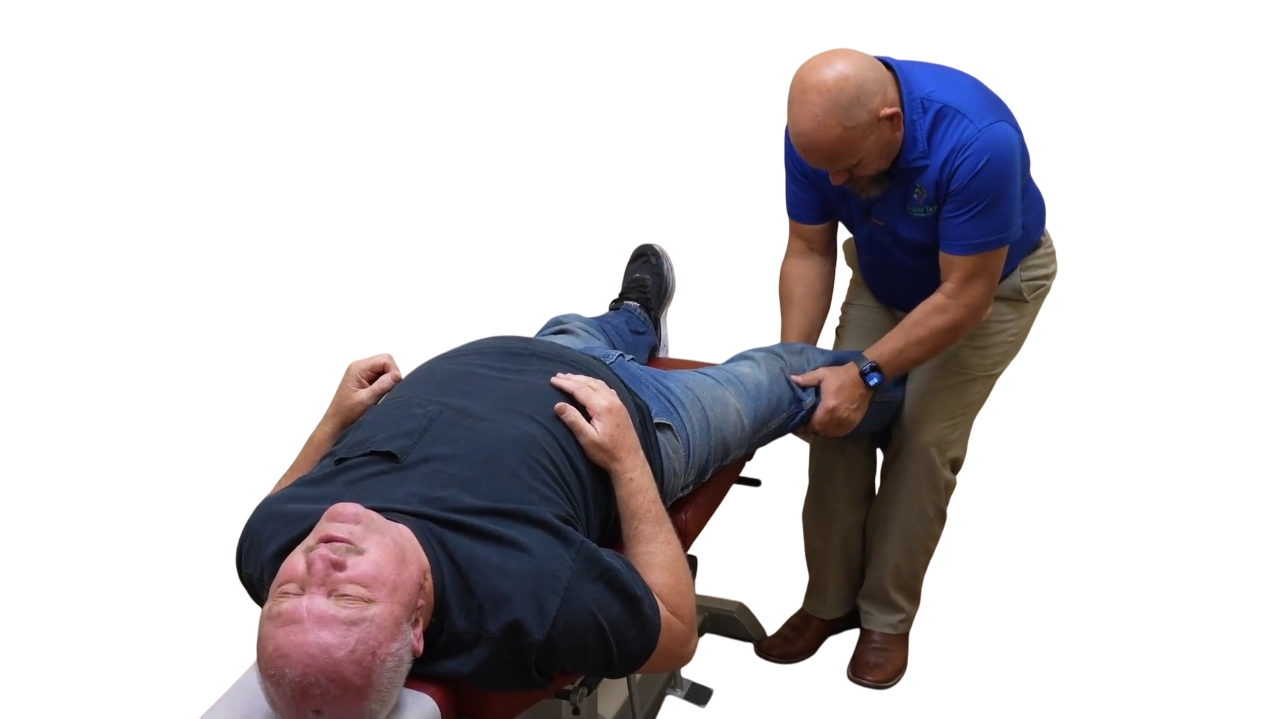
For whiplash injuries, we use a combination approach. Gentle cervical adjustments restore neck motion, massage therapy releases muscle spasm and trigger points, and cold laser helps calm inflammation in injured tissue.
We also use specific exercises to restore normal range of motion and keep scar tissue from limiting movement. The goal is full recovery, not just pain management.
With my certification in Spinal Trauma from the International Chiropractors Association, I understand the complex biomechanics of whiplash. Every patient gets treatment designed for their injury pattern.
The R.E.S.T.O.R.E. Method for Auto Injuries
Auto accident injuries often respond well to our R.E.S.T.O.R.E. Method, which addresses immediate pain while correcting the underlying damage.
We reduce your pain quickly with adjustments and therapy, release tight muscles, strengthen muscles that were overstretched during impact, and retrain your neuromuscular system to help prevent chronic problems.
This multi-modal approach helps keep acute auto injuries from becoming long-term pain problems.
Insurance and Legal Considerations
Getting evaluated within 24 to 48 hours creates important medical documentation. It’s much harder for insurance companies to question your injuries when your medical records start the day after the accident.
We work with personal injury attorneys throughout Oklahoma City, and they refer patients to us because we provide thorough documentation. Learn more in our post on whiplash documentation for personal injury claims.
Our treatment notes include detailed injury descriptions, diagnostic findings, treatment provided, and your progress, which is the documentation attorneys and insurers need.
Protecting Your Claim
Gaps in treatment hurt your claim. If you wait two weeks before seeing anyone, the insurance company may argue you weren’t really injured.
Consistency matters too. If we recommend three visits per week and you come once, your claim can look weaker. Following your treatment plan protects both your health and your legal rights.
We coordinate with your attorney to provide the documentation needed for your case, including detailed reports of your injuries, treatment, and prognosis.
Real Cases of Delayed Injury Symptoms
I had a patient who was rear-ended at a red light. It was a low-speed collision with minor vehicle damage, and she felt fine at the scene.
Three days later she could barely turn her head. She had severe neck pain, headaches, and shoulder pain radiating down her arm from whiplash that had gone untreated for 72 hours.
We started treatment immediately and she recovered, but it took longer than it likely would have with immediate care.
Another patient hit his head on the side window during a side-impact crash. He felt dazed but walked away. Two days later he couldn’t concentrate at work, had severe headaches, and felt nauseous.
He had a mild traumatic brain injury that wasn’t immediately obvious. With proper care, including medical evaluation and cognitive rest, he made a full recovery, but waiting those two days made recovery harder. Every case is different, and results vary.
Why Choose Family Tree Chiropractic for Auto Injuries
Not all chiropractors have specialized training in auto accident injuries. My Advanced Competency in Whiplash and Brain Traumatology and certification in Spinal Trauma reflect that focus.
I’ve treated thousands of auto accident cases in Oklahoma City. I understand the injury patterns, the treatment approaches that work best, and the documentation needed for insurance and legal claims.
We have our core treatment options under one roof, so you don’t get bounced between offices for adjustments, therapy, massage, and imaging.
Same-Day and Next-Day Appointments
We prioritize auto accident patients because of the urgency. Call us today, and we’ll typically see you the same day or next day.
Our digital X-ray system provides imaging on your first visit, so there’s no waiting days or weeks for imaging elsewhere.
You’ll leave your first visit understanding what we found and what your treatment plan will be. We test, find the root cause, and build a plan to address it.
Prevention of Chronic Pain After Accidents
The best way to prevent chronic pain after a car accident is early, comprehensive care. Don’t wait for symptoms to appear or worsen.
Follow your treatment plan consistently. Skipping appointments or stopping too early can lead to incomplete healing.
Do your home exercises and follow activity restrictions. If I tell you to avoid heavy lifting for two weeks, there’s a reason. Pushing too hard too soon can re-injure healing tissue.
When to Seek Emergency Care
Many auto accident injuries are appropriate for chiropractic care, but some symptoms require immediate emergency evaluation.
A severe headache that keeps getting worse, loss of consciousness, confusion, seizures, vision problems, or slurred speech can signal a serious brain injury. Go to the ER immediately.
Severe neck pain, new numbness or weakness in your arms or legs, severe abdominal pain, chest pain, difficulty breathing, or signs of internal bleeding also need emergency care. Get evaluated at the ER first, then see us for follow-up care of musculoskeletal injuries.
Frequently Asked Questions
How long after a car accident can symptoms appear?
Many symptoms show up within 24 to 72 hours, but some, like concussion symptoms or lingering neck pain, can take several days to become clear.
Should I go to the ER or a chiropractor first?
Go to the ER first if you have warning signs like a worsening headache, confusion, numbness, chest pain, or abdominal pain. If you feel fine or only sore, a prompt chiropractic evaluation is a good next step.
Will insurance cover my care after an accident in Oklahoma?
Often, yes. Oklahoma is an at-fault state, so the at-fault driver’s insurance is usually responsible, and your own medical payments coverage or health insurance may also apply.
Your Next Steps
If you’ve been in a car accident in Oklahoma City within the last week, call Family Tree Chiropractic at (405) 340-4400 today. Don’t wait for symptoms to appear or worsen.
Even if you feel fine, hidden injuries might be developing. Our comprehensive evaluation looks for problems before they become chronic and creates prompt medical documentation for your insurance claim.
Our $49 new patient special includes consultation, examination, digital X-rays if needed, first adjustment, cold laser therapy, a detailed report of findings, and a massage voucher. Visit our contact page to schedule online, or call for same-day appointments. The sooner we start, the better your outcome tends to be.
Family Tree Chiropractic in Oklahoma City is committed to advancing patient health through innovative and compassionate chiropractic care. Led by Dr. Micah Carter, our team integrates modern techniques such as shockwave therapy with a holistic approach to pain relief and wellness. We believe in empowering our patients with comprehensive treatment options that address the root causes of pain and promote long-term health and vitality.