Plantar fasciitis relief in Oklahoma City doesn’t have to mean months of limping around hoping it eventually gets better. At Family Tree Chiropractic, Dr. Micah Carter uses shockwave therapy to break down the scar tissue and chronic inflammation that’s causing your heel pain—and patients are getting back to normal activities faster than they thought possible.
I’ve seen people walk down our hallway crying from pain, and within two weeks they’re going up and down stairs with no problem. That’s the power of treating plantar fasciitis at its source.
What Plantar Fasciitis Actually Is
The plantar fascia is a thick band of tissue running along the bottom of your foot from your heel to your toes. It supports your arch and absorbs shock when you walk, run, or stand.
Plantar fasciitis happens when that tissue gets inflamed, damaged, or develops small tears from overuse or stress. The classic symptom: stabbing pain in your heel with your first steps in the morning. That pain often eases up as you move around, then comes back after standing or walking for extended periods.
Here’s what patients tell us: it feels like stepping on a nail or a sharp stone. Some describe it as a deep ache that radiates through the arch. Others say their heel is so tender they can barely put weight on it.
The frustrating part is how persistent it can be. You rest for a few days and feel better, then it comes roaring back the moment you return to normal activity.
Why Rest, Ice, and Stretching Often Aren’t Enough
Most people start with the standard advice: rest, ice, stretch your calf, roll your foot on a tennis ball, wear better shoes, try arch supports.
Sometimes that works, especially if you caught it early. But if you’ve had plantar fasciitis for months, those approaches are often just managing symptoms, not addressing the real problem.
Here’s what happens in chronic plantar fasciitis: the damaged tissue develops scar tissue and adhesions. The fascia loses its normal elasticity. It can’t stretch and absorb shock like it’s supposed to, so every step creates more micro-trauma.
Stretching scar tissue doesn’t make it healthy tissue again. Ice reduces inflammation temporarily, but doesn’t break down the adhesions. Rest gives the fascia a break, but as soon as you’re active again, the problem returns because the underlying damage hasn’t healed.
At our practice, we see people who’ve been dealing with heel pain for six months, a year, sometimes longer. They’ve tried everything their doctor suggested. They’ve bought expensive shoes and custom orthotics. They’ve iced religiously and stretched every morning. And it’s still there.
That’s when they need a treatment that actually changes the tissue quality.
How Shockwave Therapy Treats the Root Cause
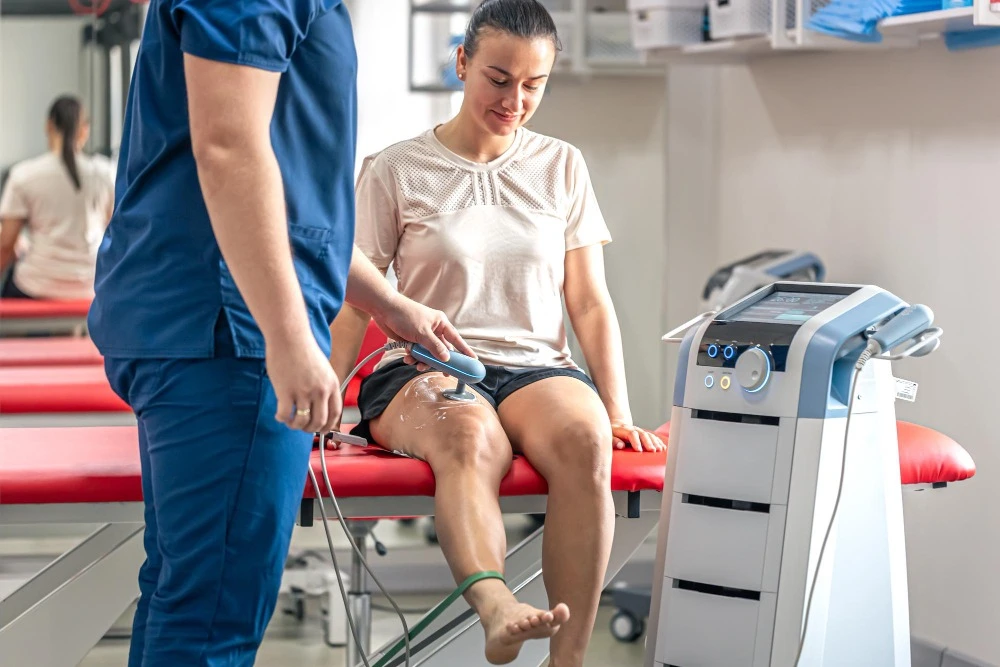
Shockwave therapy uses high-energy acoustic waves to stimulate healing in chronic soft tissue injuries. For plantar fasciitis, it does three critical things:
Breaks down scar tissue. The shockwaves create controlled microtrauma in the damaged fascia. This might sound counterintuitive, but it triggers your body’s natural healing response. New blood vessels form, inflammation resolves, and healthy tissue gradually replaces the old scar tissue.
Increases blood flow. Better circulation means more oxygen and nutrients reaching the damaged area. The plantar fascia has relatively poor blood supply naturally, which is partly why it heals so slowly. Shockwave therapy dramatically improves that blood flow.
Reduces pain. The treatment affects pain receptors and nerve endings, providing relief while the actual healing process happens over the following weeks.
I call shockwave one of the best treatments I’ve seen, and plantar fasciitis is a perfect example of why. The results are often dramatic and lasting.
What Treatment Looks Like at Family Tree Chiropractic
We start with a thorough evaluation to confirm plantar fasciitis and rule out other causes of heel pain like stress fractures, nerve entrapment, or arthritis. We’ll assess your gait, check foot and ankle mechanics, and look at how your spine and pelvis are aligned—because foot problems often stem from issues farther up the chain.
Once we’ve confirmed plantar fasciitis, we build a treatment plan. Shockwave sessions typically run 10-15 minutes. The provider applies the shockwave device directly to the affected area on your heel and along the plantar fascia.
Does it hurt? Most patients describe it as tolerable discomfort, not pain. You’ll definitely feel the shockwaves being delivered, but it shouldn’t be excruciating. We adjust intensity based on your comfort level.
Most people need 4-6 sessions spread over several weeks. Some severe cases need more. We reassess your progress throughout treatment and adjust as needed.
Many patients notice improvement after just a few treatments. The morning pain decreases. You can walk farther before symptoms kick in. Activities that were impossible become manageable again.
Why We Combine Shockwave with Other Therapies
While shockwave is the primary treatment for chronic plantar fasciitis, we often incorporate other therapies to speed recovery and prevent recurrence:
Chiropractic Adjustments
Your feet are the foundation of your entire body. If your pelvis is misaligned or your lower back isn’t moving correctly, it affects how your foot strikes the ground with every step. We adjust the spine and pelvis to ensure proper mechanics from the ground up.
Custom Stretching and Strengthening
As the fascia heals, we add specific exercises to restore flexibility and strengthen the muscles that support your arch. This helps prevent the plantar fasciitis from coming back once you’re pain-free.
Massage Therapy
Tight calf muscles and restricted ankle mobility contribute to plantar fascia stress. Massage therapy releases tension in the lower leg and improves overall foot mechanics.
Cold Laser Therapy
Cold laser accelerates tissue healing at the cellular level. It pairs beautifully with shockwave for stubborn cases.
Gait Analysis and Correction
Sometimes plantar fasciitis develops because of how you walk or run. We analyze your gait and provide corrections or recommend appropriate footwear to reduce stress on the plantar fascia.
Who Gets Plantar Fasciitis (And Why)
Plantar fasciitis is one of the most common causes of heel pain, affecting millions of people. We see it frequently in:
- Runners and athletes (repetitive impact)
- People who stand on hard surfaces all day (nurses, retail workers, teachers)
- Individuals with high arches or flat feet
- Those who are overweight (extra stress on the plantar fascia)
- People over 40 (tissue loses elasticity with age)
- Anyone who suddenly increased their activity level
Sometimes it develops without any obvious trigger. You wake up one morning with heel pain, and it progressively gets worse over weeks.
The good news: shockwave therapy works regardless of why you developed plantar fasciitis. We’re addressing the damaged tissue directly, not just managing symptoms.
Real Results: What Patients Experience
A patient came in who’d been dealing with plantar fasciitis for eight years. Eight years of limping every morning, avoiding walking her dogs, giving up hiking with friends. She’d tried cortisone shots, custom orthotics, months of physical therapy. Nothing gave her lasting relief.
After six shockwave sessions, she was hiking again. Not pain-free 100% of the time yet, but functional. By session ten, the morning pain was gone. She called it life-changing.
That’s not unusual. I’ve treated hundreds of plantar fasciitis patients, and the pattern is consistent: week by week, the pain decreases, function improves, and people get back to activities they’d given up on.
Why Cortisone Shots Aren’t a Long-Term Solution
Many patients have tried cortisone injections before coming to see us. Cortisone can provide temporary relief by reducing inflammation, but it doesn’t heal the damaged tissue. And repeated cortisone shots can actually weaken the plantar fascia, increasing the risk of rupture.
Shockwave therapy is different. It doesn’t just mask symptoms—it stimulates actual tissue regeneration and healing. The results are lasting because we’re changing the quality of the tissue, not just temporarily reducing inflammation.
When to Seek Treatment
If you’ve had heel pain for more than a few weeks, get evaluated. Early intervention tends to work faster than waiting until you’ve had chronic plantar fasciitis for months or years.
That said, even long-standing cases respond well to shockwave therapy. I’ve successfully treated people who’ve had heel pain for five, eight, ten years. It just takes consistency and patience with the treatment process.
Red flags that need immediate medical attention:
- Sudden, severe heel pain after an injury
- Inability to bear weight on your foot
- Heel pain accompanied by fever or swelling
- Numbness or tingling in your foot
These could indicate fractures, infections, or nerve problems that need different treatment.
Getting Back to Your Life
The goal isn’t just reducing your pain score from an 8 to a 5. It’s getting you back to walking your dog, playing with your kids, standing through your work shift, running, hiking, golfing—whatever matters to you.
Plantar fasciitis steals quality of life in ways people don’t always recognize. You stop planning activities that involve walking. You avoid trips that require being on your feet. You give up hobbies that used to bring you joy.
At Family Tree Chiropractic in Oklahoma City, we’ve helped hundreds of patients get past chronic heel pain and back to normal function. The R.E.S.T.O.R.E. method works because we’re not just chasing symptoms—we’re addressing the damaged tissue at the source, then making sure your foot mechanics are correct so it doesn’t come back.
Prevention: Keeping Heel Pain From Returning
Once you’re pain-free, prevention matters:
Maintain flexibility. Regular calf and foot stretching keeps the plantar fascia supple.
Wear appropriate footwear. Shoes with good arch support and cushioning reduce stress on the plantar fascia. Avoid walking barefoot on hard surfaces.
Don’t ignore early warning signs. Minor heel discomfort is your body’s signal to back off before it becomes chronic plantar fasciitis.
Keep your spine aligned. Poor mechanics in your pelvis and lower back affect how your foot hits the ground. Regular chiropractic care helps prevent problems before they start.
Progress activities gradually. If you’re starting a new exercise program or increasing mileage, do it slowly. Sudden increases in activity often trigger plantar fasciitis.
Frequently Asked Questions
How many shockwave treatments does plantar fasciitis need?
Most patients see significant improvement within 4-6 sessions, though some cases need 8-10 treatments. Severe or long-standing plantar fasciitis may take longer. We monitor progress and adjust the treatment plan as needed.
Is shockwave therapy painful for plantar fasciitis?
Most patients describe it as tolerable discomfort rather than pain. You’ll feel the shockwaves being delivered, but it shouldn’t be unbearable. We adjust intensity based on your feedback.
Can plantar fasciitis come back after shockwave therapy?
If we address the underlying causes—poor foot mechanics, tight calves, spinal misalignment—recurrence is less likely. Many patients remain pain-free long-term. Proper footwear, stretching, and periodic maintenance care help prevent it from returning.
Will insurance cover shockwave therapy?
Coverage varies by plan. We can verify your benefits during your consultation. Many patients find it worth paying out of pocket given how much faster they recover compared to months of failed conservative treatment.
Ready to stop limping through your day? Schedule your $49 new patient consultation with Dr. Carter at Family Tree Chiropractic in Oklahoma City or call (405) 340-4400. Let’s get you walking pain-free again.