
Chiropractic treatment for herniated discs typically involves spinal decompression, specific adjustments, and rehabilitation exercises over 8-12 weeks to reduce disc pressure and promote natural healing. At Family Tree Chiropractic in Oklahoma City, Dr. Micah Carter uses a comprehensive approach that addresses both immediate pain relief and long-term disc healing, helping most patients avoid surgery while returning to normal activities. Understanding the treatment process helps you know exactly what to expect at each stage of your recovery.
Your First Visit: Comprehensive Evaluation
Your first appointment begins with a detailed consultation about your symptoms and medical history. I need to understand when your pain started, what makes it better or worse, and whether you’ve had previous treatments.
Herniated disc symptoms vary widely. Some people have severe leg pain with minimal back pain. Others have mostly back pain. Some experience numbness and tingling. The symptom pattern tells me which disc is likely herniated and how severely.
I ask specific questions about your daily activities, work demands, and goals. Someone who needs to return to manual labor has different treatment needs than someone with a desk job. Your treatment plan gets customized based on your specific situation.
Physical Examination
The physical exam includes orthopedic tests that identify which disc is herniated. Straight leg raise tests, reflex checks, and muscle strength assessments tell me exactly where the problem exists.
I evaluate your posture, spinal alignment, and how you move. Herniated discs create compensatory movement patterns. Your body naturally tries to avoid positions that increase pain, creating abnormal mechanics.
Range of motion testing shows how much your disc problem limits movement. This gives us a baseline to measure improvement throughout treatment.
Digital X-Rays
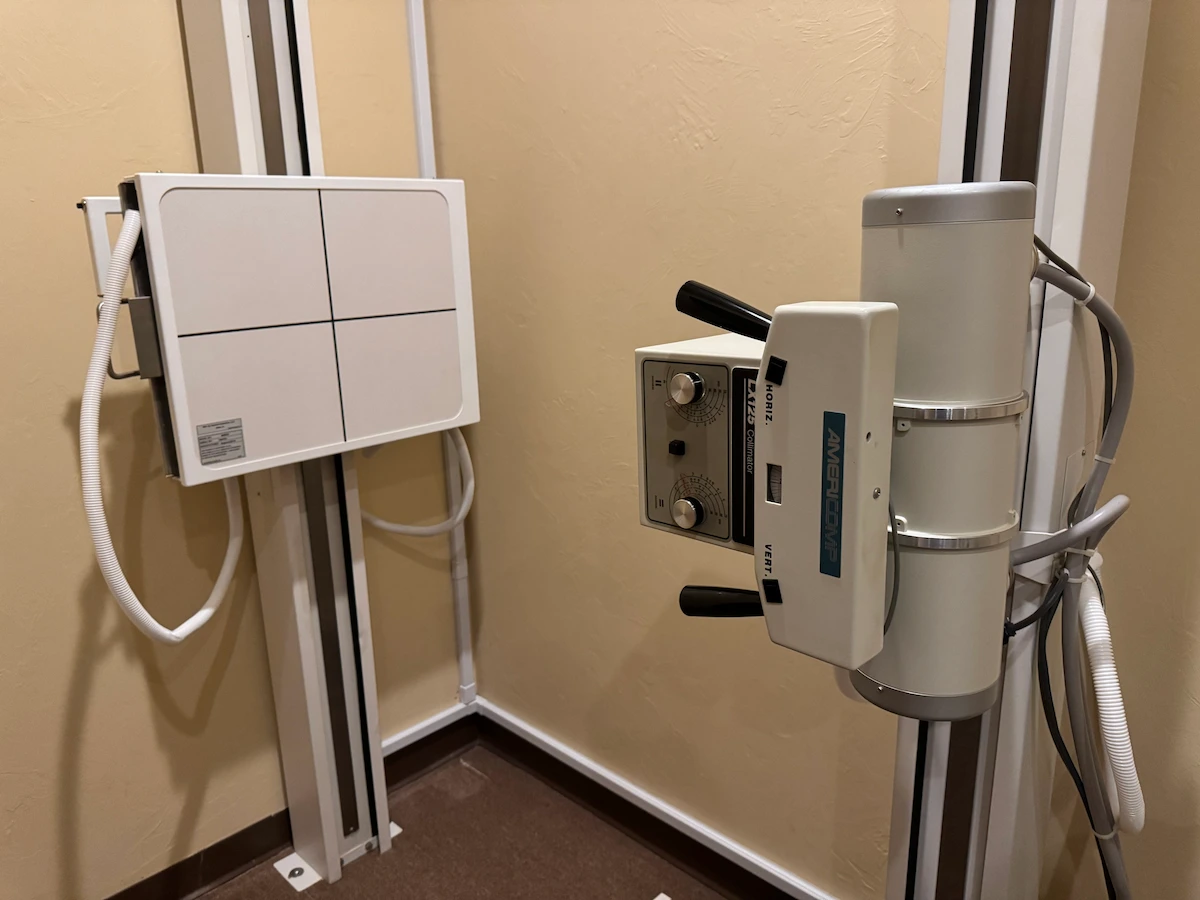
We take digital X-rays on your first visit when appropriate. X-rays don’t show the disc itself, but they reveal important information about spinal alignment, disc space height, and degenerative changes.
Our high-frequency digital X-ray system produces the clearest images possible. You get answers the same day, not weeks later waiting for imaging appointments at other facilities.
Sometimes MRI is necessary to confirm disc herniation severity. If you already have an MRI, bring it to your first appointment. If you need one and don’t have it, I can order it or coordinate with your physician.
Report of Findings: Understanding Your Condition
On your second visit, I sit down with you for a detailed report of findings. You’ll see your X-rays and understand exactly what’s wrong with your disc.
I explain the difference between a bulging disc and a herniated disc. I show you which disc is affected and how it’s compressing the nerve. Understanding your condition helps you participate actively in your recovery.
You’ll learn your specific treatment plan including expected timeline, visit frequency, and what we’ll do during each phase of treatment. No surprises, just clear expectations based on your examination findings.
Treatment Goals and Timeline
Most herniated disc cases need 8-12 weeks of consistent treatment for significant improvement. Some patients feel 50% better within 3-4 weeks. Full disc healing takes longer.
We set specific, measurable goals. Reduce pain by 50% in six weeks. Improve range of motion by 30 degrees in four weeks. Return to work in eight weeks. Clear goals let us track progress objectively.
I’m honest about realistic expectations. Some large herniations take longer. Some cases eventually need surgery despite our best efforts. But most herniated discs respond well to comprehensive conservative care.
Spinal Decompression Therapy
Spinal decompression is the cornerstone of herniated disc treatment. The specialized table gently stretches your spine to create negative pressure in the affected disc.
This negative pressure allows the herniated disc material to pull back from the nerve. It also increases nutrient and oxygen flow into the disc, promoting healing. The disc actually heals rather than just having symptoms managed.
Each decompression session lasts 20-30 minutes. You lie comfortably on the table while it performs gentle stretching cycles. Most patients find it relaxing, often falling asleep during treatment.
What Decompression Feels Like
You’ll feel gentle pulling sensations as the table stretches your spine. There’s no sudden jerking or cracking. The computer-controlled system makes tiny adjustments throughout the session.
Some patients experience mild soreness after their first few sessions as the disc begins healing. This is normal and indicates the treatment is working. The soreness usually resolves within a day.
Most herniated disc patients need 20-28 decompression sessions. We start with 3-4 sessions per week initially, then taper to 2-3 times weekly as you improve.
Chiropractic Adjustments for Disc Problems
Specific adjustments address spinal misalignments that contribute to disc problems. When vertebrae are misaligned, they create uneven pressure on discs. Over time, this abnormal pressure causes herniation.
I use gentle adjustment techniques appropriate for herniated disc patients. We’re not forcing anything or creating sudden movements. The adjustments are specific, controlled, and safe.
Adjustments also reduce muscle spasm and nerve irritation. When the spine is properly aligned, muscles relax and nerve function improves. Many patients notice immediate pain relief after adjustments.
Adjustment Frequency
Initially, you’ll receive adjustments 2-3 times per week along with decompression therapy. As the disc heals and your body holds corrections better, we reduce visit frequency.
Some patients worry about becoming “dependent” on adjustments. That’s not how it works. As your disc heals and muscles strengthen, your body maintains proper alignment better. Eventually, you transition to occasional maintenance care or none at all.
Cold Laser Therapy
Cold laser therapy accelerates disc healing and reduces inflammation. The low-level laser penetrates deep into tissue, reaching the damaged disc.
At the cellular level, the laser stimulates ATP production, which provides energy for healing. It also reduces inflammatory chemicals and improves circulation to the affected area.
Laser therapy is completely painless. Most patients don’t feel anything during treatment except the light touch of the laser device. Each session takes just 5-10 minutes.
Therapeutic Exercises and Rehabilitation
Specific exercises are critical for herniated disc recovery. I provide a customized exercise program based on which disc is herniated and your healing stage.
Early exercises focus on gentle movement to prevent stiffness without stressing the healing disc. McKenzie exercises help centralize pain, drawing it from your leg back toward your spine.
As healing progresses, we add core strengthening exercises. Strong core muscles support your spine and reduce stress on discs. This prevents future herniations and maintains the corrections we’ve made.
Home Exercise Compliance
The exercises I give you aren’t optional if you want optimal results. Patients who do their home exercises consistently recover faster and have better long-term outcomes.
I teach you exactly how to perform each exercise with proper form. Done incorrectly, exercises can aggravate disc problems. Done correctly, they’re essential for healing.
Most home exercise programs take 15-20 minutes daily. That’s a small investment for avoiding surgery and recovering your quality of life.
Activity Modifications During Treatment
Certain activities aggravate herniated discs and slow healing. I provide specific guidelines about what to avoid and what’s safe during different treatment phases.
Prolonged sitting typically makes disc problems worse. If your job requires sitting, we discuss modifications like standing desk options, frequent position changes, and proper lumbar support.
Heavy lifting and forward bending put enormous pressure on discs. These activities need temporary restriction during the healing phase. As the disc heals, we gradually reintroduce activities.
Sleeping Positions
Sleeping position significantly affects disc healing. I recommend specific positions based on your disc location and symptom pattern.
Most herniated disc patients do best sleeping on their back with a pillow under their knees, or on their side with a pillow between their knees. These positions reduce disc pressure during sleep.
Stomach sleeping usually makes disc problems worse by increasing spinal extension. If you’re a dedicated stomach sleeper, we work on transitioning to healthier positions.
What to Expect Week by Week
Weeks 1-2: Initial Phase
The first two weeks focus on reducing acute pain and inflammation. You’ll come in 3-4 times per week for decompression, adjustments, and laser therapy.
Many patients notice some improvement within the first week. Pain might reduce from an 8 to a 6. Range of motion often improves quickly. Sleep quality typically improves as pain decreases.
Some patients experience fluctuating symptoms during this phase. You feel better one day, then worse the next. This is normal as the disc heals. Healing isn’t linear.
Weeks 3-6: Active Healing Phase
During weeks 3-6, most patients see significant improvement. Pain often reduces by 50% or more. Activities that were impossible become manageable again.
We continue decompression and adjustments but might reduce frequency to 2-3 times weekly. We add more active rehabilitation exercises as you’re able to tolerate them.
This is when many patients want to stop treatment because they feel so much better. Stopping too soon risks re-herniation. The disc needs continued treatment to heal completely.
Weeks 7-12: Strengthening and Stabilization
The final phase focuses on strengthening and preventing recurrence. Decompression frequency reduces to 1-2 times weekly. Exercise intensity increases.
We work on functional movements relevant to your daily activities and work. The goal is returning you to everything you want to do without restrictions.
By week 12, most patients have reduced pain by 70-90% and returned to normal activities. Some chronic or severe cases need additional time, but significant improvement is the norm.
Measuring Progress Objectively
We don’t rely on just how you feel to measure progress. Subjective improvement is important, but objective measures provide clearer pictures.
Range of motion testing shows measurable improvement in spinal mobility. Strength testing demonstrates when muscle function returns to normal. Orthopedic tests that were positive initially often become negative as you heal.
Pain scale tracking helps too, but it’s not the only measure. Some patients have fluctuating pain during healing but show steady improvement in function. What you can do matters as much as how much it hurts.
When Surgery Might Still Be Necessary
Most herniated discs respond to conservative treatment. But some cases do need surgery. I’m honest about this from the beginning.
Progressive muscle weakness, loss of bowel or bladder control, or severe nerve compression that doesn’t respond to conservative care within 6-8 weeks might require surgical intervention.
Even if surgery becomes necessary, the conservative treatment you’ve done isn’t wasted. Improved muscle strength and mechanics before surgery lead to better surgical outcomes and faster post-operative recovery.
Cost and Insurance
Most insurance plans cover chiropractic care and spinal decompression for herniated discs. We verify your coverage before starting treatment and provide accurate cost estimates upfront.
Workers’ compensation and personal injury cases typically cover comprehensive herniated disc treatment. We have extensive experience with these payers and handle all required documentation.
Our $49 new patient special includes consultation, comprehensive examination, first adjustment, X-rays if needed, report of findings, and massage voucher. This gives you thorough evaluation so we can create your treatment plan.
Real Patient Results
I treated a 45-year-old nurse with L5-S1 disc herniation causing severe leg pain. She couldn’t work, couldn’t sleep, and was scheduled for surgery in six weeks.
We started intensive decompression and adjustments three times weekly. After two weeks, her pain dropped from 9 to 6. After six weeks, she was at a 2-3 and back at work. She cancelled her surgery.
Another patient had L4-L5 herniation with significant leg weakness. His orthopedist said surgery was his only option. He decided to try conservative care first.
After 12 weeks of treatment, his leg strength returned to normal and pain reduced by 80%. That was three years ago. He’s still doing well with occasional maintenance care.
Getting Started
Your journey to sciatica relief and disc healing starts with comprehensive evaluation. We’ll identify your specific disc problem and create a customized treatment plan.
Don’t let herniated disc pain control your life. Call Family Tree Chiropractic at (405) 340-4400 to schedule your evaluation with Dr. Carter. We’ll explain exactly what’s wrong, what we can do about it, and what timeline to expect. Visit our contact page to book online.