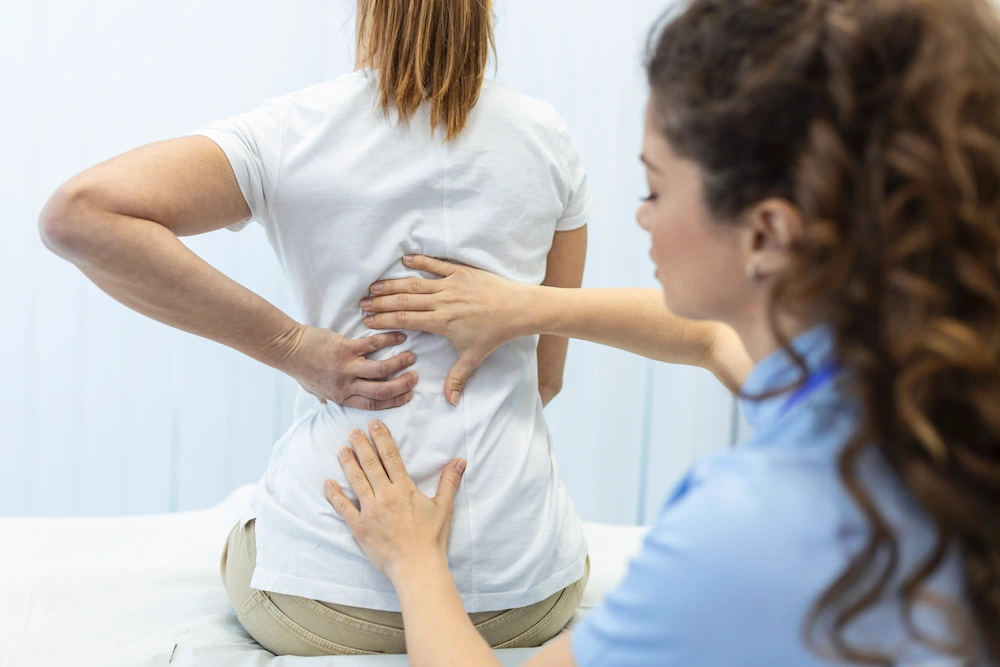
Spinal stenosis, a narrowing of the spinal canal that compresses nerves, responds well to non-surgical treatment including spinal decompression therapy, chiropractic care, and targeted exercises in many cases. At Family Tree Chiropractic in Oklahoma City, Dr. Micah Carter helps patients manage spinal stenosis symptoms and improve function without surgery, with most patients experiencing significant relief within 8-12 weeks. Surgery becomes necessary only when conservative treatment fails or neurological symptoms are severe.
What Is Spinal Stenosis?
Spinal stenosis means narrowing of the spaces within your spine. This narrowing puts pressure on the nerves traveling through the spine. Most commonly, it affects the lumbar (lower back) or cervical (neck) regions.
As the spinal canal narrows, the spinal cord or nerve roots get compressed. This creates pain, numbness, tingling, and weakness in your legs or arms depending on where the stenosis exists.
The condition usually develops gradually over years. Degenerative changes from aging, arthritis, disc problems, and thickened ligaments all contribute to progressive narrowing of the spinal canal.
Common Symptoms of Spinal Stenosis
Lumbar Stenosis Symptoms
Lower back stenosis creates pain, numbness, or cramping in your legs. Walking typically makes symptoms worse. This is called neurogenic claudication.
You might notice you can walk farther when pushing a shopping cart or leaning forward. This position slightly opens the spinal canal, reducing nerve compression.
Sitting usually feels better than standing or walking. Bending forward relieves symptoms while standing upright or walking downhill increases them. These positional changes are classic stenosis signs.
Cervical Stenosis Symptoms
Neck stenosis causes pain, numbness, or weakness in your arms and hands. Some people experience balance problems and difficulty walking from spinal cord compression.
Hand clumsiness develops in some cases. Buttoning clothes, writing, or other fine motor tasks become difficult. This indicates significant spinal cord involvement requiring prompt treatment.
Causes and Risk Factors
Age is the primary risk factor. Most spinal stenosis occurs in people over 50 as degenerative changes accumulate. Arthritis in the spine creates bone spurs that narrow the canal.
Disc degeneration contributes significantly. As discs lose height and bulge, they encroach on the spinal canal. Herniated discs can cause stenosis at specific levels.
Thickened ligaments, particularly the ligamentum flavum that runs along the back of your spinal canal, can fold inward and compress nerves. This thickening increases with age and arthritis.
Other Contributing Factors
Some people are born with narrow spinal canals. These individuals develop symptomatic stenosis earlier than those with normal canal dimensions.
Previous spinal injuries or surgeries can create scar tissue that narrows the canal. Spinal tumors, though rare, also cause stenosis by taking up space in the canal.
Why Surgery Isn’t Always Necessary
Many doctors recommend surgery for spinal stenosis relatively quickly. Laminectomy removes bone to create more space for nerves. While effective for severe cases, surgery carries significant risks.
Spinal surgery complications include infection, nerve damage, spinal instability, and failed back surgery syndrome. Recovery takes months. Some patients don’t improve or get worse after surgery.
More importantly, surgery doesn’t address all factors contributing to stenosis. Muscle weakness, poor posture, and biomechanical problems remain after surgery. These factors can lead to adjacent segment disease where stenosis develops at other levels.
When Surgery Makes Sense
Surgery becomes appropriate when conservative treatment fails after 3-6 months and symptoms significantly limit your life. Progressive weakness, especially foot drop or hand weakness, suggests surgery might be needed.
Bowel or bladder dysfunction from severe spinal cord compression requires emergency surgery. This is rare but serious when it occurs.
But for most stenosis cases without these severe symptoms, comprehensive conservative treatment should be tried first. Many patients avoid surgery through proper care.
Spinal Decompression for Stenosis
Spinal decompression therapy gently stretches your spine to create more space in the spinal canal. This reduces pressure on compressed nerves.
The computer-controlled table applies gentle traction that cycles on and off. This creates negative pressure in your discs and increases space between vertebrae where nerves exit.
For stenosis patients, decompression often provides significant relief. The increased space allows better nerve function and reduces the leg pain, numbness, and weakness.
What Decompression Feels Like
Each session lasts 20-30 minutes. You lie comfortably on the table while it performs gentle stretching cycles. Most patients find it relaxing, often falling asleep during treatment.
You might experience mild soreness after your first few sessions. This is normal and indicates your spine is responding to treatment. The soreness typically resolves within a day.
Most stenosis patients need 20-30 decompression sessions over 8-12 weeks. Some severe cases require more treatments. We evaluate progress regularly and adjust the plan accordingly.
Chiropractic Care for Spinal Stenosis
Chiropractic adjustments improve spinal alignment and reduce nerve irritation. While adjustments can’t make the spinal canal larger, they optimize how your spine moves and functions.
Proper spinal alignment reduces inflammation and muscle spasm that contribute to stenosis symptoms. Better biomechanics mean less stress on already compressed nerves.
I use gentle adjustment techniques appropriate for stenosis patients. We’re not forcing anything or creating sudden movements. The adjustments are specific, controlled, and safe for degenerative spines.
Addressing Compensatory Problems
Stenosis creates compensatory movement patterns. You naturally adjust how you walk and move to avoid pain. These compensations create problems elsewhere in your spine and pelvis.
Adjustments address these secondary problems that develop from altered biomechanics. Treating the whole spine, not just the stenotic segment, produces better outcomes.
Exercise and Physical Rehabilitation
Specific exercises are critical for stenosis management. Core strengthening stabilizes your spine and reduces stress on stenotic segments.
Flexion-based exercises often help lumbar stenosis. These exercises slightly open the spinal canal. Cat-cow stretches, knee-to-chest exercises, and pelvic tilts all promote the forward-bent position that relieves symptoms.
Extension exercises, which help some back problems, often make stenosis worse. This is why proper diagnosis matters. What helps one condition can aggravate another.
Walking Program
Regular walking maintains mobility despite stenosis. Start with distances you can manage comfortably. Gradually increase as symptoms allow.
Use a walker or shopping cart if needed. The forward-leaning position this creates often allows longer walking distances. There’s no shame in using assistive devices that let you stay active.
Stationary bike exercise is excellent for stenosis patients. The seated, forward-leaning position keeps the spinal canal more open while providing good cardiovascular exercise.
Managing Stenosis Symptoms
Positional Relief
Learning positions that reduce symptoms helps manage stenosis between treatments. Sitting with good lumbar support often feels better than standing or walking.
When symptoms flare, lying on your back with pillows under your knees opens the spinal canal slightly. Some patients find relief lying on their side in a fetal position.
Avoid prolonged standing or walking without breaks. Sit down and rest when symptoms increase. Pacing activities prevents symptom escalation.
Weight Management
Excess weight increases stress on your spine. Even modest weight loss can significantly reduce stenosis symptoms by decreasing spinal loading.
Every pound of body weight creates multiple pounds of force on your spine during movement. Losing 10-20 pounds can make a meaningful difference in symptom severity.
Cold Laser Therapy for Inflammation
Cold laser therapy reduces inflammation around compressed nerves. The low-level laser penetrates deep into tissue, reaching inflamed nerve roots.
While laser therapy can’t enlarge your spinal canal, it can reduce the inflammatory component of stenosis. Less inflammation means less effective narrowing of available space.
Many stenosis patients experience significant symptom reduction with laser therapy combined with decompression and adjustments. The multi-modal approach addresses different aspects of the problem.
Realistic Expectations and Timeline
Stenosis is a degenerative condition that develops over years. We can’t reverse decades of degeneration in weeks. Realistic expectations are important.
Most patients see significant symptom improvement within 8-12 weeks of comprehensive treatment. Pain reduces, walking distance increases, and function improves.
Complete elimination of all symptoms isn’t realistic for everyone. But meaningful improvement that allows better quality of life is achievable for most stenosis patients.
Long-Term Management
Stenosis typically requires ongoing management. Periodic decompression sessions, regular adjustments, and continued exercises help maintain improvement.
Many patients do well with monthly or every-other-month maintenance treatments after completing intensive care. This prevents symptom escalation and maintains function.
Think of stenosis management like managing any chronic condition. Consistent care maintains improvement. Neglecting care often leads to symptom return.
Comparing Conservative Care to Surgery
Conservative treatment avoids surgical risks and lengthy recovery. Most patients can continue working and normal activities during treatment.
Success rates for conservative stenosis management are good when patients commit to the full treatment program. Many patients achieve quality of life improvements comparable to surgical outcomes without the risks.
Even if surgery eventually becomes necessary, attempting conservative care first makes sense. You can always choose surgery later if needed. But you can’t undo surgery if it doesn’t work.
Addressing Concurrent Conditions
Many stenosis patients have other spinal problems. Disc herniations, sciatica, and arthritis often coexist with stenosis.
Comprehensive treatment addresses all contributing factors. We’re not just treating stenosis in isolation but optimizing your overall spinal health.
This is one reason our R.E.S.T.O.R.E. Method works well for complex cases like stenosis. We systematically address multiple factors rather than focusing on a single problem.
Real Patient Success Stories
I treated a 68-year-old retired teacher with severe lumbar stenosis. She could barely walk to her mailbox without severe leg pain. Her surgeon recommended laminectomy.
We used intensive spinal decompression three times weekly, along with adjustments and specific exercises. After eight weeks, she could walk three blocks comfortably. After 12 weeks, she was walking a mile daily.
She decided against surgery and continues periodic maintenance care. That was 18 months ago. She’s maintained her improvement and remains active.
Avoiding Surgery Through Comprehensive Care
Another patient had cervical stenosis causing arm numbness and hand weakness. His neurosurgeon recommended surgery within six months.
Cervical decompression, specific neck adjustments, and rehabilitation exercises improved his symptoms dramatically. Hand strength returned. Numbness reduced by 80%.
He chose to continue conservative management instead of surgery. Two years later, he’s functioning well with monthly maintenance treatments.
When to Seek Immediate Medical Attention
Certain symptoms require urgent evaluation. Sudden severe weakness in legs or arms, especially foot drop, needs immediate assessment.
Loss of bowel or bladder control indicates severe spinal cord compression requiring emergency surgery. This is rare but serious when it occurs.
Progressive symptoms despite treatment, especially increasing weakness, warrant re-evaluation and possible surgical consultation.
Why Choose Family Tree Chiropractic
In my 23 years treating patients in Oklahoma City, I’ve worked with many stenosis cases. These are exactly the type of challenging, complex cases I most enjoy treating.
We have the equipment and expertise for comprehensive stenosis management. Our spinal decompression table is specifically designed for creating space in stenotic spines.
We coordinate with surgeons when surgery becomes appropriate. Good healthcare means knowing when conservative care is sufficient and when surgical intervention is needed. We provide honest assessments based on your specific condition.
Getting Started with Treatment
Your first visit includes comprehensive evaluation of your stenosis. We review any imaging studies you have (MRI is most helpful for stenosis). We assess your symptoms, functional limitations, and treatment goals.
On your second visit, I provide detailed explanation of findings and treatment recommendations. You’ll understand whether conservative care is appropriate for your stenosis and what realistic outcomes to expect.
We’ll create a treatment timeline with clear goals and milestones. You’ll know exactly what’s involved and what to expect at each stage.
Don’t assume surgery is your only option for spinal stenosis. Call Family Tree Chiropractic at (405) 340-4400 to schedule your evaluation with Dr. Carter. We’ll assess your stenosis and determine if conservative treatment can help you avoid surgery. Visit our contact page to book online.